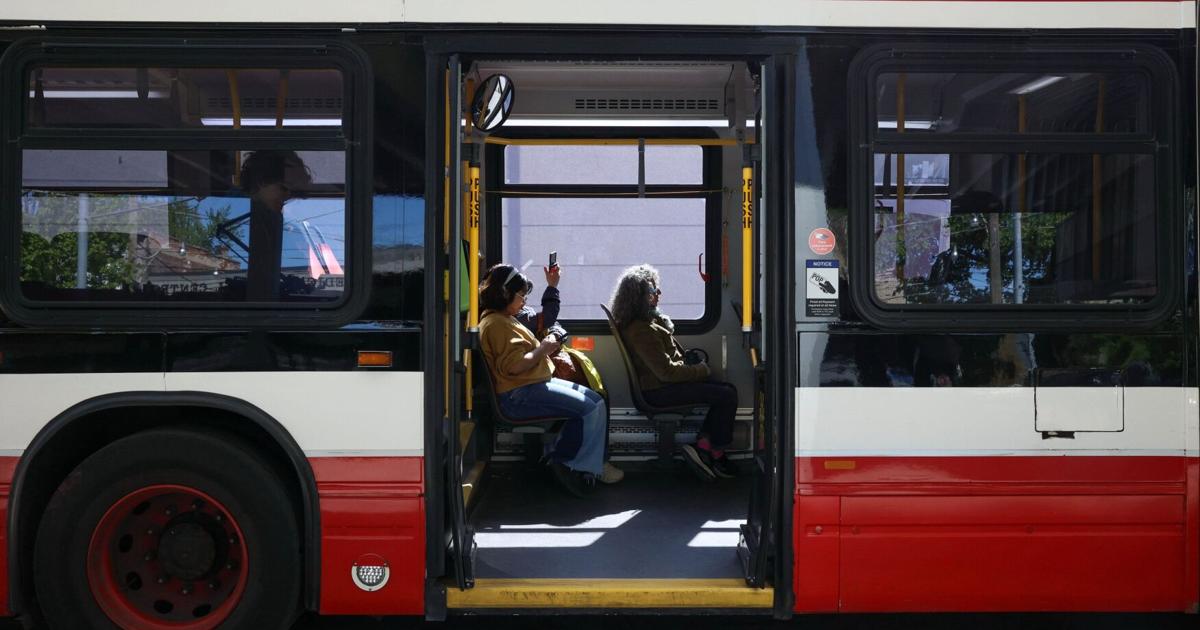
The random drug testing the TTC carries out on its employees violates their charter rights and should be halted immediately, according to a labour arbitrator decision released Monday.
Arbitrator Laura Trachuk found that the policy, which allows the TTC to pull employees at any time to swab their mouths or have them blow into a breathalyzer, is an “unreasonable exercise of the TTC’s management rights and contrary to the collective agreement.” She also wrote that saliva tests for cannabis and cocaine are not capable of determining whether someone is still under the influence.
The policy has been the subject of a legal battle between the transit agency and its largest employee union since 2011.
ATU Local 113, the union that represents about 12,000 workers in the transit agency, including bus and subway drivers, welcomed the news.
“Hundreds of workers have lost their employment because they were forced to take tests that were inaccurate and unreliable,” said union president Marvin Alfred in a statement. “This policy has been a tragedy for the workers and their families who have been devastated because of the misguided and inappropriate use of tests.”
TTC responds to arbitrator’s decision
The TTC said in a statement to the Star it is disappointed by the decision and considering whether to file a judicial review to overturn it.
“We maintain that in a safety-critical industry such as transit, random testing is the best way to ensure we are providing the safest service possible for our staff, customers and the public,” said spokesperson Stuart Green. “In that regard, this decision is extremely disappointing.”
Green did not respond to a question about whether the TTC disputes the union’s assertion the tests are inaccurate and unreliable. He also did not say whether the TTC would rehire employees fired for failing drug tests.
Alfred said the union is prepared to continue to fight the TTC through the courts and plans to “seek remedy” for fired members.
Decision questions the reliability of the drug tests
In her 389-page decision, Trachuk questioned the utility of the “oral fluid” drug tests the TTC used. This is not as reliable as a breathalyzer, which determines if someone has consumed alcohol, and has not been accepted as evidence of impairment in criminal matters, she wrote. While it may detect whether someone has used cannabis, it cannot determine whether they are still “impaired” by it. The test could still return a positive result up to 12 hours after someone had consumed cannabis.
“THC in oral fluid is not closely associated with THC in blood or plasma,” she went on. “Impairment from THC is much more variable than impairment from alcohol. Alcohol is metabolized and leaves the body quite reliably at the same linear time intervals for everyone. THC is much more individual.”
Similarly, she said a positive saliva test for “cocaine metabolites” does not indicate impairment.
Trachuk concluded that the TTC lacked sufficient justification to screen employees for drugs. The transit agency argued that random drug testing created a disincentive for drug and alcohol use because employees could be tested on any shift, at any time.
But Trachuk questioned the need for this. The TTC, she wrote, had not demonstrated a problem with drugs and alcohol in the workplace before implementing it.
“The potential deterrent effect of (random testing) … has never been found to justify it in the absence of a general problem with drugs and alcohol,” she wrote.
In an interview with the Star, Alfred dismissed the saliva swab tests as “junk science.” He also said he was offended with the whole random testing regime, which he said treated workers as if they were “guilty before being proven innocent.”
The policy has been in place since 2017 after the union’s injunction application against it was rejected by Ontario Superior Court Associate Chief Justice Frank Marrocco, who concluded that testing will “increase public safety.”