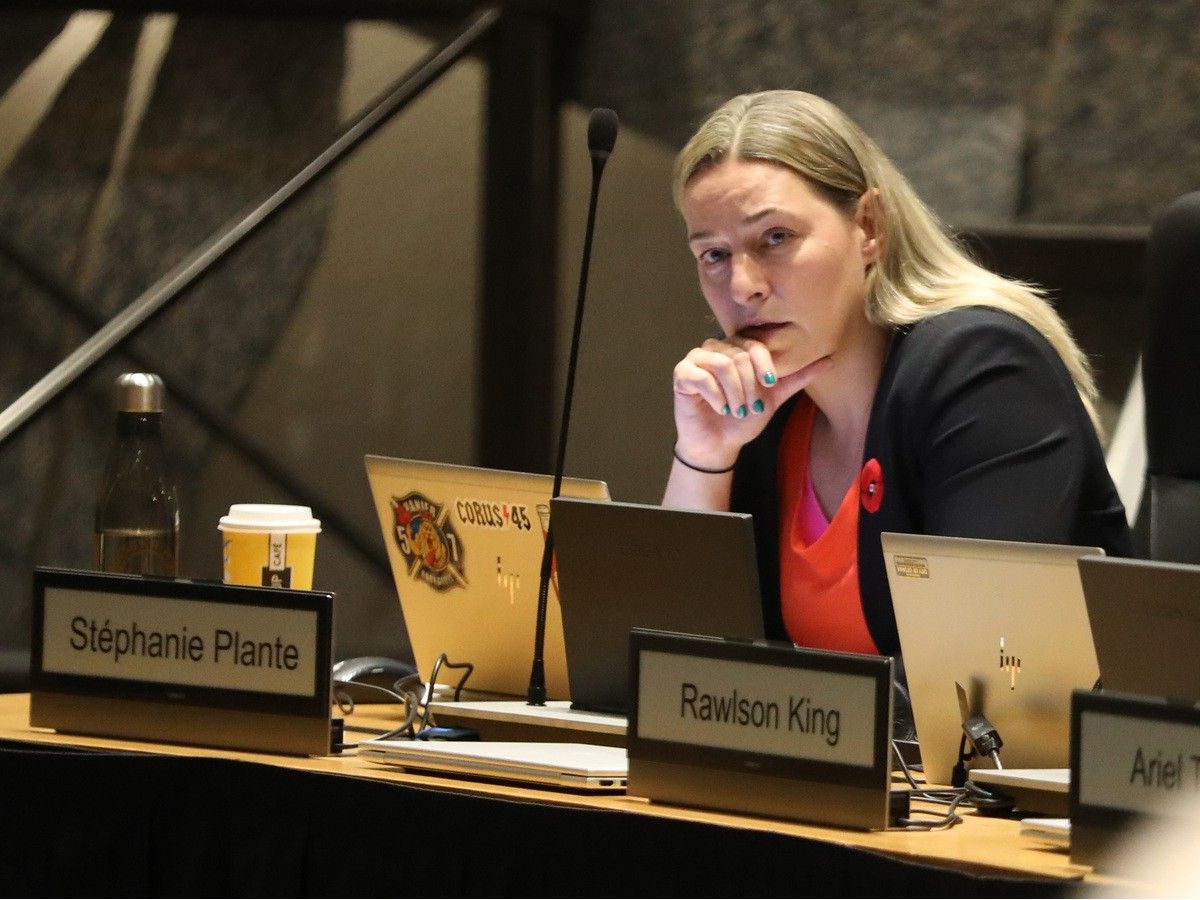
Rideau-Vanier Coun. Stéphanie Plante is asking fellow councillors to consider wastewater testing to help identify trends in drug use in Ottawa.
During the pandemic, Ottawa’s wastewater surveillance program provided an early warning for incoming waves of COVID-19. The program, headed by Rob Delatolla, a University of Ottawa engineering professor, was l auded for providing detailed information on emerging threats and helping to inform public health decisions.
The program was shut down by the Province of Ontario in July 2024, citing duplication with a federal program. The City of Ottawa took over the program, which is still used to monitor the presence of respiratory viruses and Mpox in wastewater.
Wastewater testing can be used to detect infectious diseases besides COVID as well as trends in drug use. It can also provide early warnings of dangerous contaminants in the drug supply, Plante told fellow councillors. Current surveillance methods such as police reporting, hospital data and self-reporting don’t provide real-time data on emerging substances or toxic batches in circulation, she said.
“Supervised consumption and harm reduction sites have historically provided critical drug check-in services and front-line intelligence about the local drug supply,” Plante said. “The closure or reduction of these services creates a gap in Ottawa’s ability to monitor toxic substances in circulation.”
Plante now has two weeks to convince fellow city councillors to support the initiative, which will be before them on May 27.
Fentanyl and its analogues play central roles in the ongoing overdose crisis. Wastewater testing is reliable and anonymous. The testing can be hyper-local — such as testing around homeless shelters — but it can also show how drugs are moving around the city in real time, Plante said.
“Because — spoiler alter — overdoses are not just happening downtown,” she said in an interview.
“I would like to make sure that there is some sort of dashboard and that our relevant partners can access it, whether it’s police, paramedics, emergency services, front-line workers. I’m really hopeful that people can see the benefit of this,” Plante said. “Drug dealers don’t make a consistent product. We want to be able to advise people who are working on the front lines about what they can expect on that day or that week.”
In March, Somerset Coun. Ariel Troster said there had been more open drug use , more overdoses, more calls for police and paramedics and more chaos in the community since a supervised consumption site at the Somerset West Community Health Centre was forced to close.
Two other sites , one run by Ottawa Inner City Health and another by the Sandy Hill Community Health Centre, will have their provincial funding withdrawn in June.
Last month, Ottawa’s medical officer of health, Dr. Trevor Arnason, warned of a “challenging summer.”
“My biggest concern is that paramedic calls are going to go up and emergency department visits may go up fairly quickly, based on what we have seen in other jurisdictions,” Arnason told the city’s board of health. “I think we as a community are going to experience concerning levels of requests for paramedic calls and other things.”
There’s a lot of concern, but only so much municipal representatives can do, Plante said.
“I think this is one thing we can do at the municipal level to be an early warning, just like we did during COVID or flu season,” she said.
As it stands, Ottawa Public Health already provides data on opioid-related incidents such as drug-related deaths, overdoses and visits to hospital emergency departments. For example, there were 45 confirmed opioid-related visits to Ottawa hospitals in March. In April, there were between two and six suspected drug overdose deaths. But there is a lag in reporting.
Under Plante’s pitch to city council, grant funding to run the project would come from Health Canada and the city would work with Delatolla and Dr. Monty Ghosh, an addictions physician and associate professor of medicine at the University of Alberta.

Each sample would be used to analyze for two different things, with the disease samples being tested using chemical analysis in Ottawa and the toxic substances being analyzed in Ghosh’s lab using mass spectrometry, Delatolla said.
“I think it’s amazing. There are possibilities here to provide a service and help people at risk,” he said.

It’s important to know how the drug supply is changing, Ghosh said.
“There are hotspots,” he said. “It’s just about knowing what is going on with the drug supply.”
Ghosh added that surveillance was sensitive about privacy and data issues. The goal is to make the information publicly-available in real time. The most effective ways to relay that information would be through texts or emails.
“The key here is we want to make it a community-led response.”