

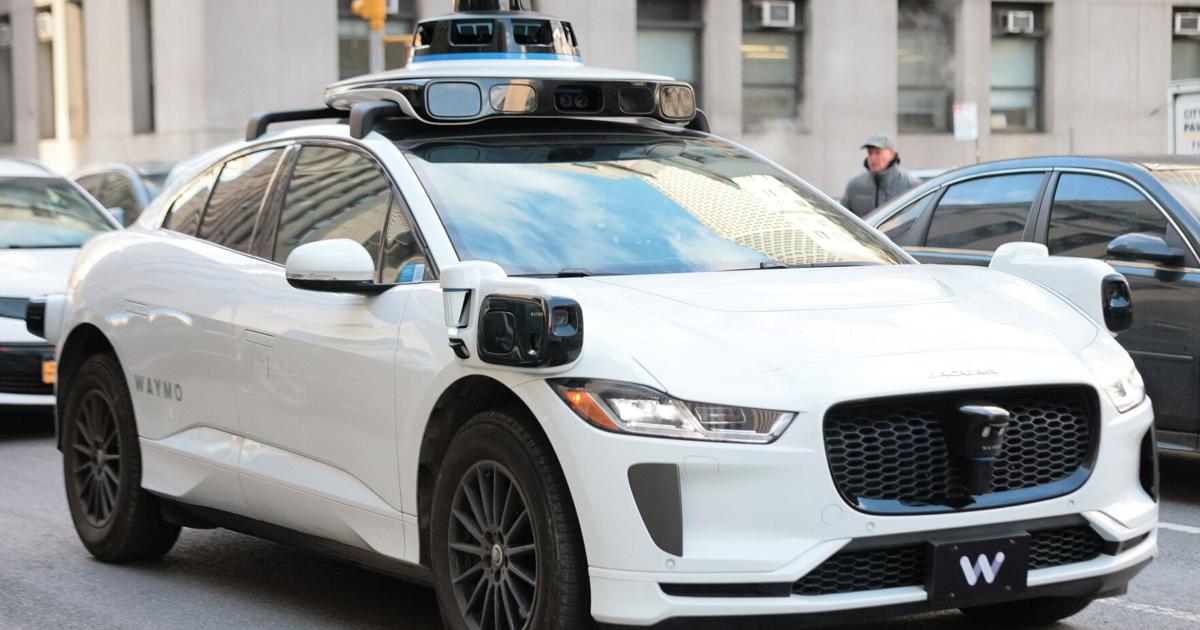
Driverless taxi company Waymo has announced plans to launch operations in Toronto, despite reservations about privacy, accessibility and extreme weather concerns.
The company said Friday Toronto residents will start to see its vehicles on the streets with humans at the wheel in the coming days, as it begins high definition mapping of local streets.
The company, which is owned by Google parent company Alphabet and bills itself as the world’s first autonomous ride-hailing service, hopes to start accepting customers by 2028.
“Expanding into Canada marks an important milestone in Waymo’s global journey,” said Waymo co-CEO Tekedra Mawakana in a blog post.
The company, which began in 2009, is taking “a rigorous, phased, safety-first approach,” beginning with local street mapping with a “trained autonomous specialist behind the wheel,” according to the post. Waymo said this validation period will ensure the company’s autonomous vehicle technology, called the Waymo Driver, “adapts seamlessly to Toronto’s distinct driving conditions.”
The Star reported in April that Waymo had told Mayor Olivia Chow’s office during a lobbying push at city hall that it planned to apply for the Ontario government’s automated vehicle pilot program, which allows for manual driving and testing. The company said it has now been approved for the program.
Chow has been critical of existing ride-hailing services’ effect on driver wages, and this spring her office signalled she had concerns about Waymo.
At a campaign stop Friday, Chow said her top concern is the safety of Torontonians.
“Self-driving cars have to be held at the highest possible standards,” she said, adding it’s something under the province’s purview that it should take seriously. “I need to see what the province’s regulations are and we can have a conversation. It’s just starting, but safety first.”
It’s not clear what role the municipality could play in governing Waymo’s driverless operations. The Ontario government has taken the lead on establishing rules for the technology.
“At this stage, vehicles will be driven by human drivers for mapping and data collection,” said Dakota Brasier, a spokesperson for the Ministry of Transportation in a release.
For the company to keep operating beyond its initial roll out, it must maintain the province’s “stringent safety and operational requirements” and meet its commitments to workers across the province with “a credible jobs plan that sets out projected positions, hiring timelines and other opportunities” for workers and businesses, said Brasier.
Toronto-based Technologists for Democracy highlighted concerns in an open letter to the Transportation Minister, including that its automated vehicles are often equipped with sensors capable of collecting sensitive personal information.
“They’re going to be sending that data back to their U.S. servers,” said Adam Motaouakkil, an organizer for the group that advocates for the ethical deployment of technology in Canada.
He pointed to labour concerns for taxi drivers who could face increased competition from services like Waymo, along with increased traffic congestion.
“There’s also the issue of responsibility. We don’t have any laws in the books on autonomous vehicles. In the case of an accident, who’s to blame?,” said Motaouakkil.
Waymo said extensive data shows that its autonomous vehicles are safer than human drivers, and predicts that automated ride-hailing operations here would be a boom to the Canadian economy and support thousands of jobs.
According to the company, its self-driving taxis in the U.S had a reduction in crashes, with 55 fewer serious injury or worse crashes, 357 fewer airbag deployments in any vehicle crashes and 841 fewer injury-causing crashes than “an average human driver” over the same distance.
Its data, pulled from 400 million fully autonomous kilometres driven, also points to a decrease in crashes involving vulnerable people on the road. Figures show 87 fewer pedestrian crashes with injuries, 56 fewer cyclist crashes with injuries and 36 fewer motorcycle crashes with injuries.
In order to adapt to Canadian driving conditions on snow-covered roads Waymo’s AI machine is learning from “real driving experience” such as going upstate New York, Michigan’s Upper Peninsula and the Sierra and collecting “tens of thousands of miles in diverse, snowy conditions,” the company said on its website.
The company has a fleet of 4,000 fully autonomous vehicles, and serves riders in 15 cities, including San Francisco, Los Angeles and Las Vegas. Waymo is pursuing a major expansion to the United Kingdom, Japan, and elsewhere, and the launch in Toronto is its first foray into Canada.

