

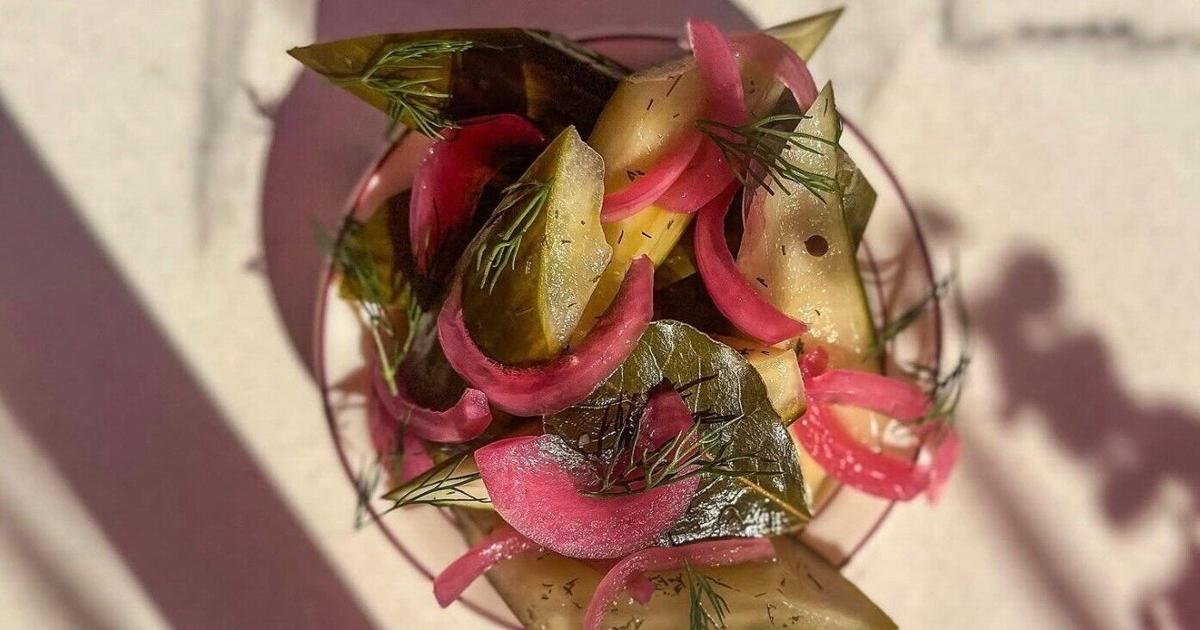
Sitting at the bar at new Lawrence Park hot spot Baba, my eye was drawn to a commanding presence behind the counter. It was an object of heft — of importance.
It was an astonishingly girthy pickle.
I couldn’t stop staring at it, as entranced by this giant gherkin as the screaming apes agog at the plinth that opens “2001: A Space Odyssey.”
The pickle’s fate was to be hewn into slivers, each impaled into a pretty S curve to adorn a martini made with house pickle brine. “I like that it gives such a classic cocktail a different savoury, briny edge,” said co-owner and chef Michael Medeiros. Many of Toronto’s restaurants, bars and purveyors are currently in thrall to pickles of all kinds.
“We are a multicultural city with a diverse food scene and so many cultures have a form of pickles in their cuisine,” said Elyse Tsotsos, owner of Golden Pigeon Beer Hall, which does a brisk business in pickled eggs and bowls of house-made pickles. (She also named her dog Pickle.)
“With the added hype from social media, pickles have really secured their spot as a salty, acidic side or snack in bars and restaurants.”
Pickles are served
The craze runs the gamut from fast food to fine dining. There’s pickle pizza at Slowhand, Beast and Nice Slice.
A dill pickle wedge salad is making the rounds at fancy events courtesy of Daniel et Daniel Catering, which also rents out a pickle fountain — picture a champagne tower, but with sour green juice cascading over pickles ready to be plucked.
The Spirit of York serves up pickled artichokes with a turnip dip. Butter Chicken Factory slings an achari paneer tikka packed with Indian-pickle flavour.
The Park Hyatt Toronto’s sustainably-minded restaurant Joni is pickling chanterelles and white beets, and fermenting gooseberries for the fall menu.
“It’s nice to see one of the oldest methods of preserving food finally having its moment,” said chef de cuisine Shaya Ilgacs. “Funny that it took us this long to realize it was never really out of style.”
The rise of Picklegram and PickTok
The trend really kicked off during the pandemic, when many people spent a lot of time at home making sourdough bread and trying their hand at preserves, according to Dana McCauley, CEO of the Canadian Food Innovation Network.
“It’s kept rolling from there as more people are engaging with those types of flavours,” she said. “It created that foundational curiosity and acceptance.”
Canadians may be especially primed for the pickle renaissance, given our long-standing affair with dill pickle chips, McCauley added. In Toronto, that’s boosted by our high Eastern European population and the recent influx of pickle-loving Ukrainians.
Social media has helped ferment the phenomenon in the past couple of years. People take to TikTok to show off their pickle tacos, pickle lemonade or the pickle cheesecake pop that went viral at this year’s CNE, while brands recruit influencers to tout ever more outlandish pickle products, like Prince Igor’s Extreme Pickle vodka and e.l.f. cosmetics’s Dill Glow Reviver lip balms.
This weekend, there is an entire festival devoted to the pickle. At Picklefest, running at Henderson Brewery Oct. 3 to 4, enthusiasts can sample the usual jarred preserves, as well as more unusual interpretations.
There will be pickle chocolate, pickle bread, pickle momos and pickle patties. Dipped Donuts is offering up doughnuts rolled in kimchi sugar, and pickle cheesecake doughnuts rolled in dill sugar, while Moonmilk is bringing their deep-fried pickle ice cream. Mamajoun Pizza is making a pickle pie with white dill sauce. You can even buy pickle candles.
New innovations aside, Picklefest founder Adin Wener is confident the staple isn’t going anywhere soon. “Pickles existed before the word ‘trendy’ was a word,” he said. “When the bomb hits, it’ll be the cockroaches and the pickles that are left.”
Gut check
Inspired by the old-school pickle plate at venerable steak house Barberian’s, 416 Snack Bar has had a pickle plate on its menu for years. It changes seasonally but may include beets, carrots or cauliflower, each pickled differently, served on pebbled ice.
“Maybe because of how cutthroat the industry is, a lot of places’ menus skew fatty, to try and calm everyone’s tattered souls,” owner Adrian Ravinsky says. The need to cut the grease of comfort food may help explain the pickle’s recent popularity, he says.
He hopes the craze sticks around, because of the probiotic boost of fermented vegetables. “It shouldn’t be a trend, it should be a lifestyle — gut health for life!”
The health benefits of pickled and fermented foods is indeed helping to drive the trend, said Culinary Concierge founder Christine Couvelier. They’re also nostalgic and comforting. “Memories have a lot to do with the popularity of food, and a lot of people will say, ‘Oh, I remember when my grandmother made pickles,’ or ‘I tried to make pickles myself.’”
That goes for chefs, too: Michael Angeloni proudly serves his nonna’s pickled green tomatoes at Notte Ristorante, while caterer Noushe’s signature dish is pickled apple torshi (a traditional Persian pickled-veg side) from a recipe by owner Iman Dadkhahi’s mom.
Pickles are also much more versatile and accessible than many food trends. “They show up a lot of places; they don’t just have to have to be on a gourmet or grocery shelf,” said Couvelier. That helps explain why the global pickle market will keep growing, she said; it’s anticipated to hit $28.15 billion USD this year, according to a Fortune Business Insights report.
She’s tried pickle smoothies, pickle marshmallows and pickle cotton candy, and has been developing a pickle dust in her own test kitchen. But her favourite is the glickle — pickles with edible glitter in the brine.
Cultural delicacies
The current pickle supremacy in Toronto may stem from the fact that two of the city’s hottest cuisines — Asian and Jewish — have a long history with the mouth-puckering marvel.
Mhel won Michelin raves for its dashi-pickled cucumbers, while Aburi Hana just relaunched with some pickle-forward dishes, including a steak tartare studded with smoked pickle, and a salad featuring bettarazuke, a traditional pickled daikon radish, and lotus root pickled in sweet vinegar and dashi.
“Pickles are familiar to many people, but there is always something new to discover,” said head chef So Sakata. “It is nice to see people becoming interested in more than only the usual cucumber or dill pickle.”
Pickles have long been a star of banchan, the little side dishes served with Korean meals. At 156 One Five Six, they are a cornerstone, whether it’s pickled zucchini with mustard seed and dill stems in summer or jalapenos and chayote in winter.
This spring, owner-chef Myeongseok Jeong pickled a ton of ramps; they now grace his fall pork jowl dish. “I like being able to preserve something at its peak and continue using it after its season has passed,” he said. “Pickling is a great way to work with seasonal ingredients, extend their life and bring acidity and balance to a dish. Sometimes a small amount of something pickled goes a long way.”
Jewish deli-inspired steak house Linny’s has an intensive, daily in-house pickling regimen. Its challah service is accompanied by bowls of them, while its sister spot Linny’s Luncheonette offers a potato pickle sandwich that’s gone viral a few times.
Over at Maven, owner-chef Shauna Godfrey is “always using the brine or pickling liquid in as many applications as possible.” Dill pickles become a garnish for the pastrami short rib, while brine-pickled green tomatoes go in the caesar salad. True connoisseurs can order fried pickles with dill dipping sauce, and wash it down with a pickletini.
Brine time
Plenty of bars around town are harnessing the power of the pickle, including Doc’s Green Door Lounge, where you can add a cornichon garnish to your custom martini, and snack on a bowl of manager Kat Rama’s house “quickles.” They’re flavoured with bay leaves and deseeded to make them extra crunchy, according to owner Jayson Green.
The cornichon martini is a perennial favourite at Bar Pompette. “I think people are really drawn to bold, savoury flavours right now, and pickles bring so much at once: acidity, salt, texture, freshness,” said co-founder and chef Martine Bauer. “What feels new is seeing those flavours used in more playful ways.”

