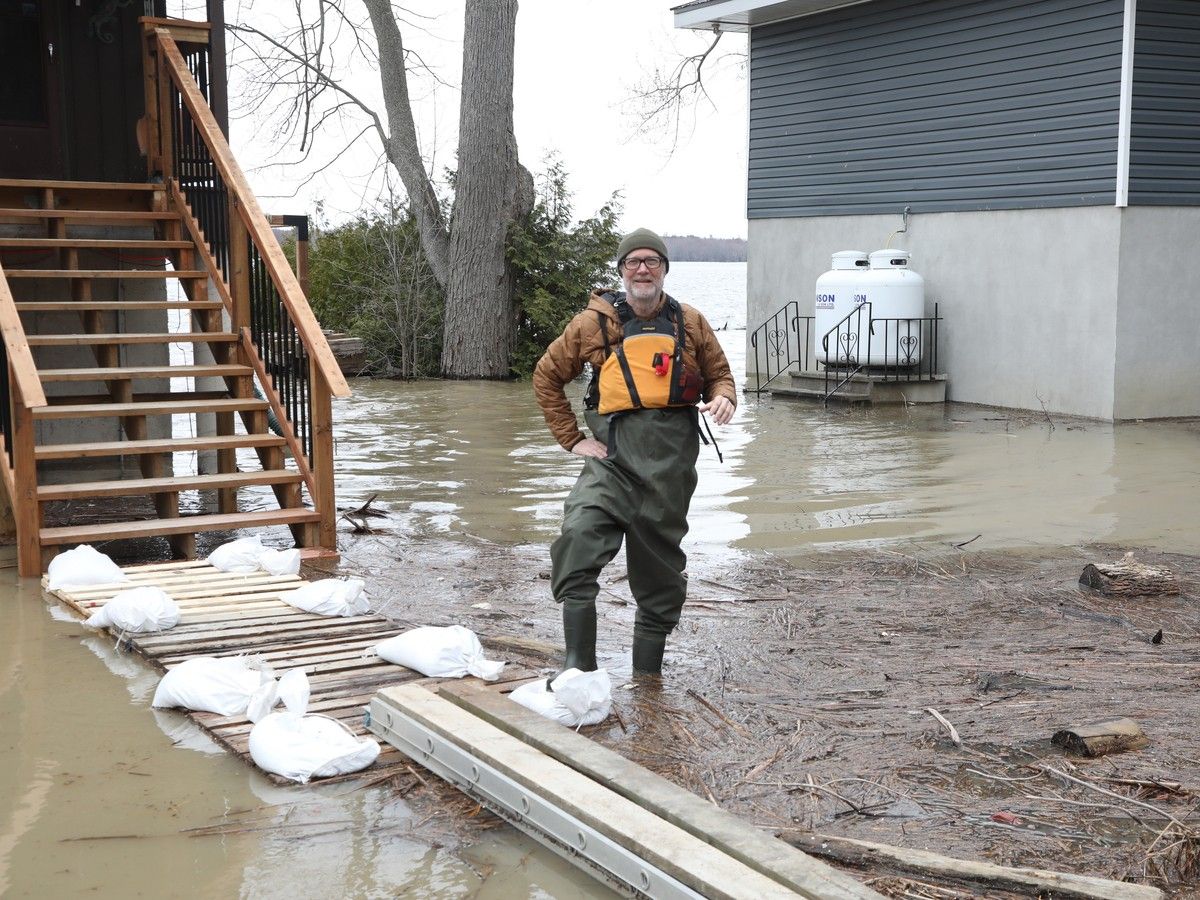
Dave McKay can hear the Ottawa River lap against his home from inside the living room.
Looking out onto the waves from a window, McKay, who’s retired, can point out all the spots in his backyard that have been impacted by flooding over the years. The waters have risen enough this spring that, to access his front door, he’s set up a makeshift wooden bridge fortified by sandbags.
“You can no longer go in normal rubber boots. You have to go with waders,” McKay said.
Entering his home, he can point out exactly where previous flood waters rose to meet the sides of his kitchen counters, staining the wood. Today, the water sits in his backyard.
McKay has lived at his home, a waterfront on the Ottawa River, since 2001. The first year he had to deal with flooding was
2017
, but then he had to deal with it in both 2019 and 2023.
Now, he’s bracing again this year as areas along the Lower Ottawa River face a flood warning issued April 20 by the
Rideau Valley Conservation Authority
.
“In 2023, I got lots of help sandbagging. It took about 6,000 sandbags,” McKay said. “My foundation was destroyed.”
Now McKay’s worries include debris damage and losing heating.
“There’s debris floating, logs have come in, and I don’t want them hitting things,” McKay said. “My primary concern is the heat. I have two propane tanks at the side of the house, and I’ve sandbagged around those. If they start to rise up, they can break free. When it gets critical, I’ll have to turn off the heat and close the valves so that they’re not self-propelled rockets.”
Beyond the wrath of the flood itself, McKay is concerned about a decrease in volunteers if things get worse.
“When the floods first hit (in 2017), volunteers came out of the woodwork. When the second one hit (in 2019), there was a strong presence. But, by the time of the third one, they’re begging for volunteers now from the city,” McKay said. “It’s become the new norm and people are more complacent.”

Fitzroy Harbour is one of several communities in western Ottawa that is particularly vulnerable to
spring flooding
. Communities close to the river that are vulnerable to damage also include Dunrobin Shores and Constance Bay.
Last week, the city set up
sandbag depots
across Ottawa to help residents.
Longtime residents of the Willola Beach area like McKay have become accustomed to dealing with flooding, but it was a surprise when it first became a problem in 2017.
“Everything happened so quickly that you couldn’t get things in. There were some people walking along the street and I didn’t know them, and they came in and helped me lift everything up in the air,” McKay said. “There were 85-year-old people that were lifting sandbags, Mother’s Day, here.”
Further down the street, Sara D’Arcy’s home also catches waves against the side, shaded by trees with water pooling at their stumps. For her seven-year-old son, the view of rising waters has been a source of entertainment.
“It’s his favourite thing,” D’Arcy said. She also has an 11-year old and says the kids are taking the situation great. “(They’re) having fun seeing the water.”
“And, as a single mom with two kids, it’s like anxiety-inducing being in there and thinking I’m powerless, right?” D’Arcy said. “The good news is my kids haven’t taken on any stress, which means I hope I’m doing a good job in keeping that away from them. Every day they come home from school and say, ‘It’s risen a little bit.’ And I’m like, ‘Yes, it has, sweetheart.’”
D’Arcy moved into her home in 2023, the last time the
community experienced significant flooding
.
“I’ve always wanted to live on the water, right? I’m a water person, so I’ve loved everything about the water, but I didn’t really understand the anxiety of being in there,” D’Arcy said. “Like I’m sitting there, watching the hockey game, then you can see the water, just you can see sort of the moonlight reflecting off the water right literally in front of you.”
D’Arcy reads the available water data and knows when the levels are normal.
“I had to ask my neighbor, who’s lived here a lot longer, ‘Is this normal?’ Now I know what’s normal and what’s considered a major flood, but, and we’re not there yet, right? It’s just nobody knows what the predictions are going to look like,” D’Arcy said.
“It’s the unknown.”
For D’Arcy, the volunteers “have been amazing. For me, it’s about support to put in some mitigating strategies. The volunteers are exhausted, there’s fatigue, there’s PTSD from this having happened too many times. It just keeps happening. So you need something permanent. You need to either fortify the front or to lift your house.”
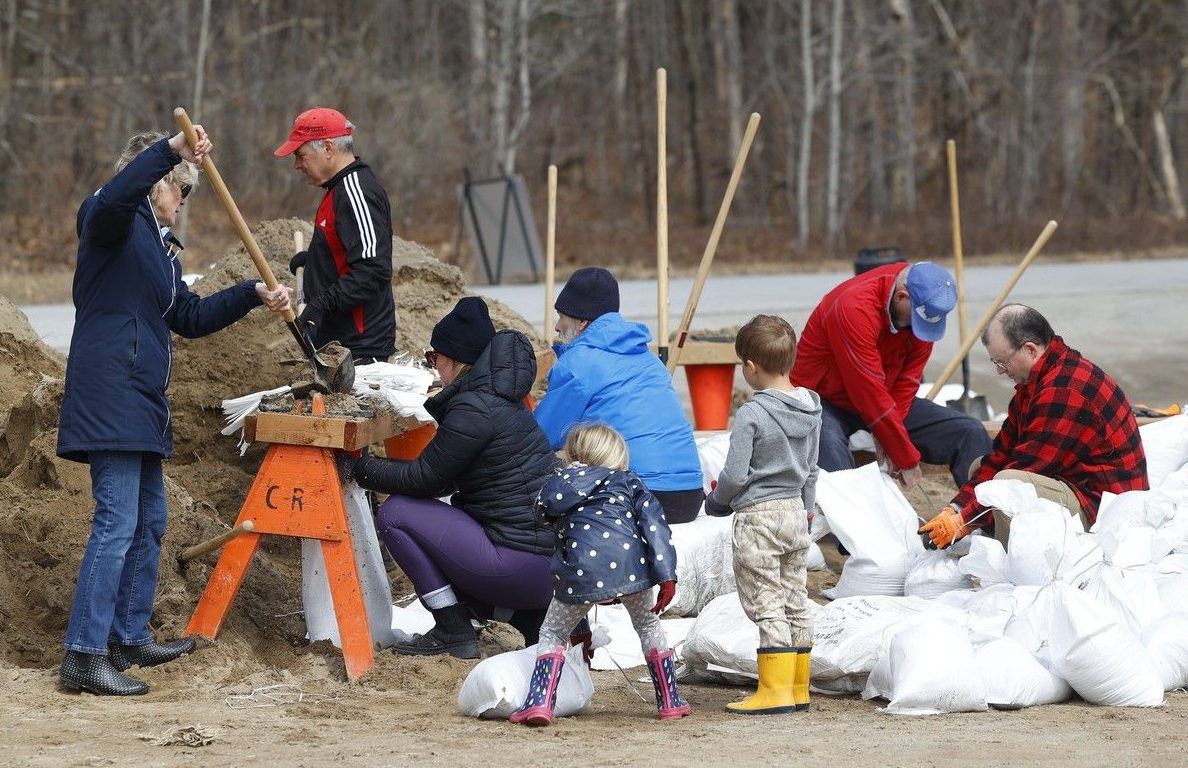
Mike Campbell, acting president of the Willola Beach Property Owners Association, doesn’t live right on the water like his neighbours, but directly across from them, and he has spent recent days helping out as much as he can.
On Tuesday morning, Campbell and McKay teamed up to bring in the community’s raft so it wasn’t “banging around” in the waves.
Campbell, who grew up in the community, said flooding concerns had increased since 2017.
“With global warming, it may be the new way of thinking that you’re just going to have to grin and bear it,” Campbell said while pointing at where one homeowner had set up a makeshift concrete wall. “People are going to have to take steps to do something with their properties to protect their properties.”
Like McKay, Campbell has noticed a drop in the number of volunteers.
“We’ve had flooding several times before now,” Campbell said. “People are getting tired of helping. You can’t get volunteers. And I’m 62. And my arms are like rubber right now from working the last two days. So I’m trying my best to help where I can.”
West Carleton-March Coun. Clarke Kelly, who has been to the neighbourhood several times in recent days, told McKay and Campbell he’d be sending down porta potties since flooding had compromised residents’ septic systems.
In the wider ward, Kelly said, flooding has already affected many homes.
“People have had their gas shut off,” Kelly said. “Wells and septics are compromised, and out here, if you know if your well is covered in water from the river, you can’t drink the tap water.”
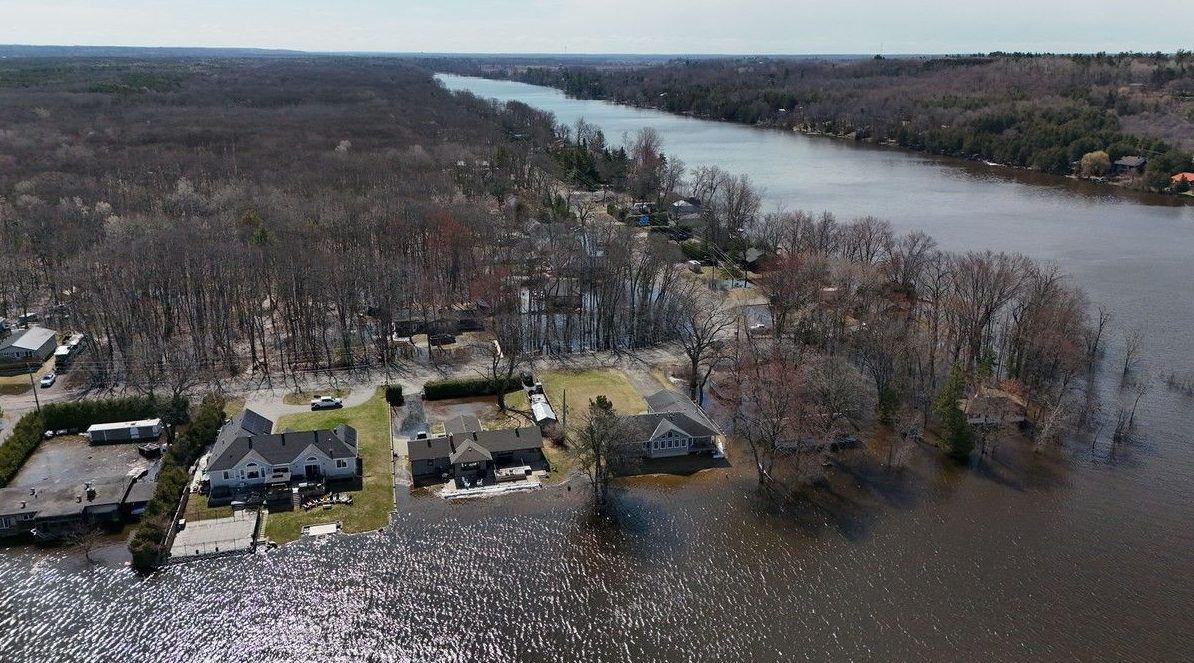
Kelly, who said he was keeping an eye on communities like Willola Beach, Vydon Acres, Dunrobin and Constance Bay, added he had also noticed a drop in volunteers since 2023.
“We did have a really good turnout over the weekend, but now times are tough these days and people need to work as much as they can,” Kelly said. “At the same time, the community’s been amazing. We have had people come out, even people who are not from this community.”
Kelly said residents should keep an eye on the forecast from the
Ottawa River Regulation Planning Board
and understand what the water levels meant for their properties.
“And I’m urging everyone to have a plan. Don’t wait until the water is at your doorstep to come and get sandbags or to mobilize friends and family to help you,” Kelly said. “Those are things you need to think about now, and hopefully you don’t need them, but you should be thinking about it now.”
Related
Our website is your destination for up-to-the-minute news, so make sure to bookmark our homepage and sign up for our newsletters so we can keep you informed.