There’s a universal expectation that children should be safe in their own home.
But since April 2026, Ottawa parents have been reminded four times that their homes could be a place of hidden danger for their child.
In the last four months, the Ottawa Police Service recorded four serious incidents of children falling from residential windows or balconies in Ottawa.
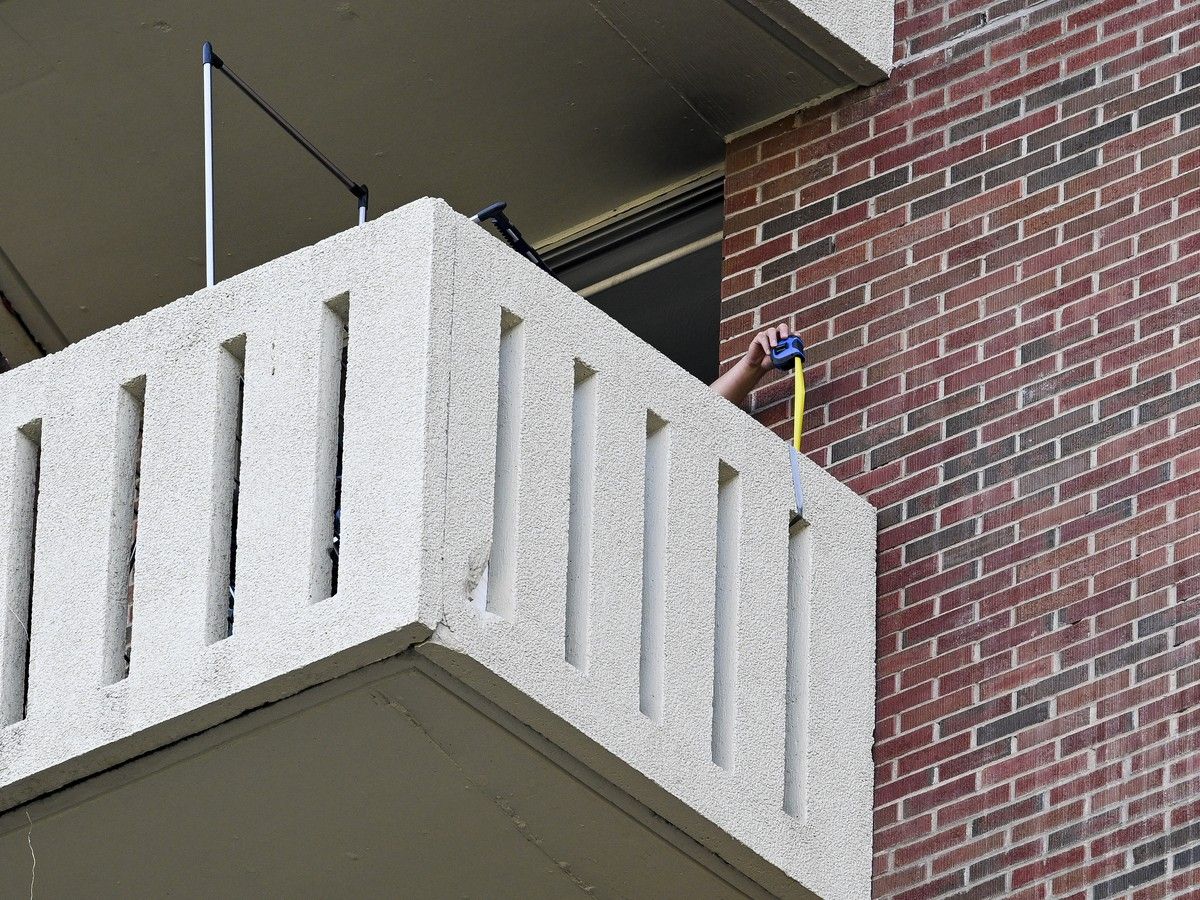
The most recent one happened on July 4, when a young girl was taken to the hospital in critical condition after she had fallen from an 11th-floor balcony at an Alta Vista Drive highrise.
Although the Ottawa Police had confirmed that the girl was in stable condition after the incident, residents who witnessed the incident told the Ottawa Citizen they had been shaken to their core.
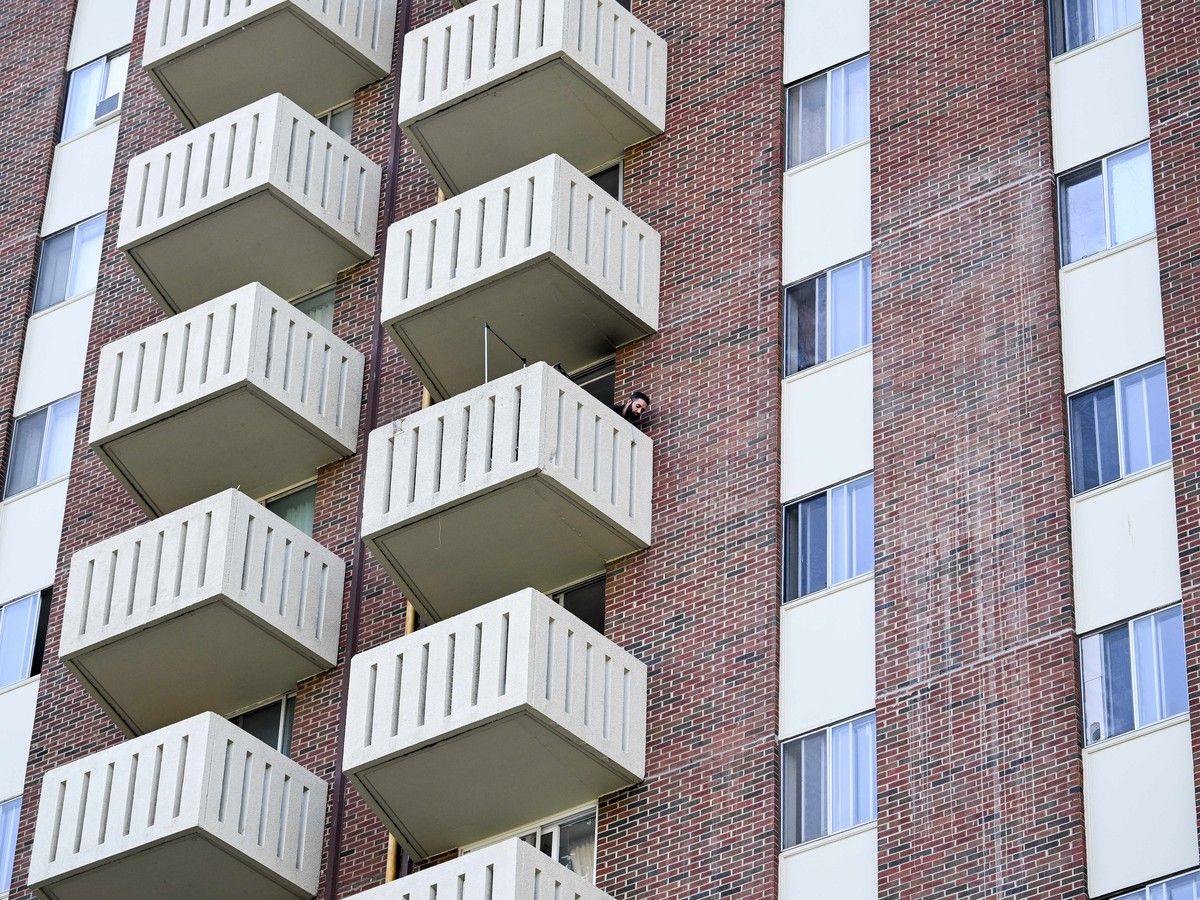
That’s because earlier this spring, there were three other serious falls for children.
In early June 2026, a child was taken to the hospital with critical injuries after falling from a fourth-floor balcony of a residential building in Stittsville.
In late May, a young girl similarly fell from a residential building in Vanier, where she sustained serious but not life-threatening injuries.
The most tragic incident happened in late April when a young boy died after he fell from the window of a Laurier Avenue East apartment.
The back-to-back incidents prompted the police and the Ottawa Paramedic Service to issue statements on child window safety for parents and guardians.
“Four (serious incidents) in such a short time span is concerning,” Ottawa Paramedic Service spokesperson Marc-Antoine Deschamps told the Citizen, as officials continue to sound the alarm on child window safety in Ottawa.
Residents call for action
For the Alta Vista Drive parents who witnessed Saturday’s “traumatic” incident, the encounter left them terrified for the safety of their own children, who live in the same building.
Sadia Chowdhury and Syed Rubel, parents of seven-year-old Dihan Syed and six-year-old Salman Syed, say they will never forget the trauma associated with seeing the little girl hurt.
The family had been in the living room when they heard people screaming outside. From their fifth-floor balcony, they saw the unspeakable.
Chowdhury was with her two children when Rubel rushed to the scene. The rest of the family would eventually follow him down.
“I still can’t forget,” Chowdhury recalled. “It was very traumatic, seeing a child like that.”
Now, Chowdhury and her family say balconies in their Alta Vista Drive apartment feel unsafe for their own children.
“Everybody is worried,” Chowdhury said, adding that neighbours in the area were weeping for the girl and her mother.
“It’s not safe, and something must be done.”

What’s causing the spike?
Unintended falls from windows and balconies have been increasing since 2021.
According to the latest available data from the CHEO Emergency Department, while the total number of falls dropped by half from 2020 (20 falls) to 2021 (six falls) that number has only increased since.
In 2025, there were a total of 18 children who fell from windows and balconies. So far in 2026 (between January and May) there have been a total of nine falls, according to CHEO.
Though there are many factors that could explain this uptick, some experts say heat is part of the picture.
In a news release from January, Environment and Climate Change Canada said 2026 will likely be among the hottest years on record.
The weather network said Ottawa will see both warmer and cooler than normal air conditions throughout the summer. Between July and September, Ottawa will see “above normal” temperatures.
Dr. Emily Newhouse, medical health officer at Fraser Health in British Columbia, says heat is why we see window falls more commonly across warmer months.
“With climate change and our communities getting even hotter, people don’t necessarily have access to air conditioning, so people rely on ventilation from windows to keep their spaces cool,” she explained.
Chowdhury and her family are experiencing it firsthand, and they are not alone.
The family said they don’t have air conditioning in their apartment unit and rely on fans and windows being open for ventilation.
Paramedics spokesperson Deschamps said the service recommends parents always supervise their children when near balconies or open windows.
“We want to remind parents and people who care for children to always remember that these things happen very quickly. I can understand that with temperatures rising, you want to open up the windows wide, but this can come with a significant risk,” Deschamps said.
What can you do to protect your child?
As innocent, playful, loving and honest as they are, children are also — in many ways — the most curious among us.
That’s why Newhouse suggests installing a gate in front of residential windows which would prevent children from falling through while keeping air circulating.
The gaps on these gates should be no greater than 10 centimetres, Newhouse said.
“There are some really good ways we can have our windows open more safely,” she said. “But those unfortunately aren’t present consistently in homes across our country.”
The Ontario Building Code (OBC) is the piece regulation that dictates standards for window sizing and fall protections.
The 2012 version of this code was much less restrictive in its requirements for window guards, according to Laura Elliott, training development manager at RSM Building Consultants.
The building code was updated in 2024, introducing new rules requiring highrise residential buildings to have window guards if the unit is on the second floor or higher with a drop more than 1.8 meters, and if the bottom edge of the window sill is lower than the required 900 millimetres (three feet) mark from the floor.
“The requirement went from 480 millimetres in 2012 to 900 millimetres in 2024, so it’s a big increase that we saw,” Elliott explained.
Though the code became restrictive, the OBC does not force owners and operators of buildings to upgrade their windows should there be new safety requirements, according to Samir Chidiac, a civil engineering professor at McMaster University.
The only time the building code comes into effect is if the building is being altered.
“In general, new (Ontario Building Code) requirements apply to new buildings and do not apply to existing buildings, and because of how the code works, it tends to be more than likely the cause(s) of these unfortunate accidents,” he said.
For now, Newhouse says parents can take steps to install these window safety measures on their own.
Newhouse also suggests keeping furniture away from windows and the edges of balconies as another safety measure.
“If there’s furniture near the edge that’s essentially a platform that kids can get higher and lean over,” she explained.
Children are top-heavy, she said. A child’s head weighs more in proportion to their body than an adult’s does. This means if a child leans over a balcony or out of a window, they can more easily fall to the ground.
Deschamps from the Ottawa Paramedic Service says he also recommends parents have a conversation with their children when they are old enough.
“Explain to them what the dos and don’ts, which is mainly: Do not lean on the (window) screens, (and) Do not climb on furniture on the balcony.”
But how old is old enough? Deschamps says he will leave it up to parents to make that decision.
After a long day at Alta Vista Drive, Chowdhury and Syed explained to their children in front of me not to go out on the balconies. Chowdhury turned toward the both of them as she repeated her sentence.
They nodded in silence.
Child window safety in other countries:
Other countries like Japan and the United States have implemented safety measures for child window safety.
Jim Graham, who ran the National Association for Child Window Safety since 2011, wrote Minnesota’s first child window safety legislation, known as Laela’s Law, in 2007. The legislation required devices like strong safety screens in multi-family housing to prevent dangerous falls.
Since then, he says Laela’s Law has been adopted by about 54 states and resulted in more than 150,000 units of military housing having child safety devices, including window safety screens and bars that would withstand 100 pounds of pressure.
“Seventy-five per cent of children who suffer a fall from at least a one-storey building will have some degree of brain injury and traumatic brain injury,” Graham said.
The National Child Safety Association is one example of an organized effort to address this issue. Graham says Canada should follow suit.
“Any window that can be open will be open all the way,” he said. “No matter what part of Canada you’re in, there will be cases where people will want as much fresh air as they can get.”
Parents ‘not to blame’
For Graham, those who point the finger at parents for a preventable issue have “clearly” never been around children.
“You can be the best mother or father in the world, and the child can go through a window 10 feet from you, and you can’t reach the child before they go out of the window,” he said. “I don’t know of any parent who wants their child to go out of a window. But children go out of windows anyway.”
Though parents often bear the brunt of the backlash of children who unintentionally fall from windows, the Alta Vista community was compassionate.
“We feel sorry for the mom. I am a mom too,” Chowdhury said. “How painful it must be for her to witness her own child falling from the 11th floor?”
Her kids asked her why she was crying so much mid-interview.
She told them: ‘Because we are human.”
“Because we are kind to each other. I am crying to feel how the baby is in pain. I am crying to feel how the mama is feeling.”
Take control of your search results. Make the Ottawa Citizen a preferred source on Google and see verified local reporting first.