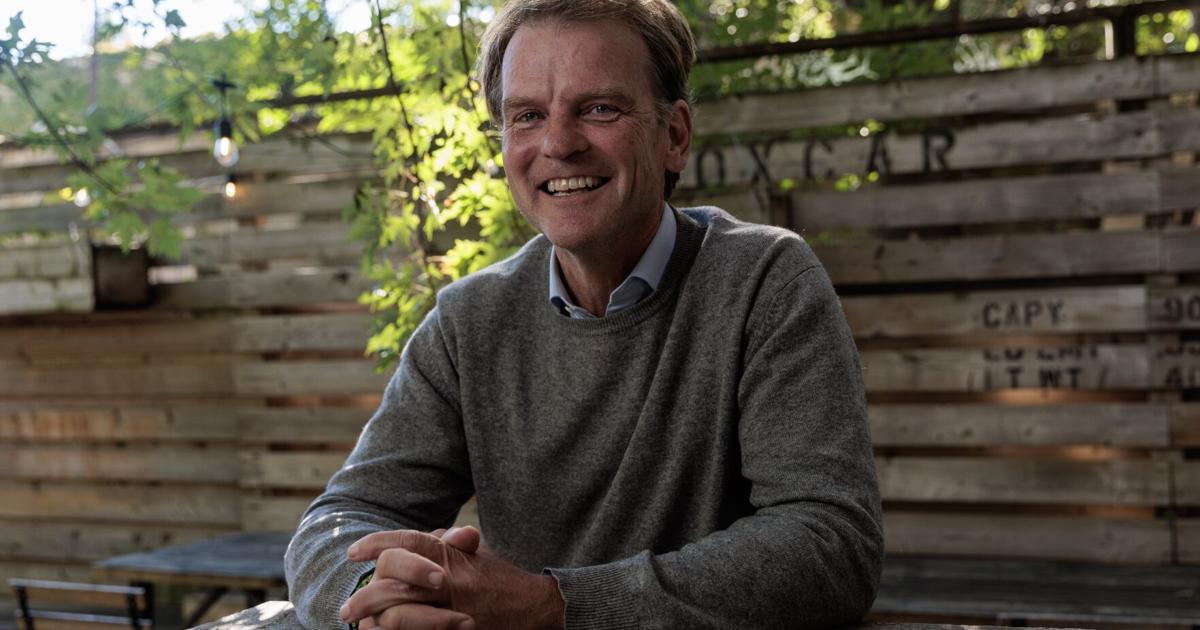
Mayoral candidate Brad Bradford says while events like the Toronto Waterfront Marathon are key to the identity of the city, they also highlight that the city needs to do a better job of coordinating events with major road closures.
Against the backdrop of the marathon, Bradford pointed out Sunday that while the city asked spectators and participants to take transit to get into the downtown core, the subway didn’t actually start operating until 8 a.m., leaving those people to find other ways to get to the starting line.
“We have an event that draws tens of thousands of people into the core and that event starts at 8 a.m., you can’t start running the subways at 8 a.m.,” said Bradford. “They will be open and running at 6 a.m. when I’m the mayor for the Toronto Marathon.”
Bradford went on to highlight some of his “common-sense measures” to get Toronto moving, such as having the TTC and Metrolinx publish their work schedules 30 days out so that people know what transit options are available to them when they’re coming into the downtown core for major events.
As well, he plans to invest in smart technology for signal priorities to ensure streetcars are actually moving and improve their on-time performance.
“For anyone whose been on Richmond or Adelaide or Dundas, …it’s often faster to walk than it is to take the streetcars. They feel like a rolling stop sign.”
Bradford says he has long advocated for a “congestion relief commissioner,” and while the city’s hiring of a traffic czar at the start of this year was a step in the right direction, he doesn’t think it’s made much of a difference.
“Toronto streets are more congested this year than they were last year and it’s an ongoing trend,” he said, claiming gridlock costs the GTA $40 million annually.
“The average Torontonian loses 100 hours in traffic disruption every year, almost as much as New York City and that’s unacceptable for a city that needs to move. Torontonians tell me all the time that Toronto feels stuck. We need leadership that is committed to unstucking it.”
Under Mayor Chow, the city has spent $3 million to quadruple the number of traffic agents who patrol some of the busiest intersections within the downtown core. The city has also hiked fines for “blocking the box” at a number of marked intersections.
Some of the other ways Bradford says he plans to tackle congestion in the city is to coordinate construction operations and shift more them to off-peak or overnight hours so they don’t impact rush hour traffic. He also plans to install cameras and new technology on city fleet vehicles that can scan and detect potholes on the road in order to streamline those operations rather than rely primarily on 311 callers.
Add CityNews Toronto as a trusted source on Google to see more local stories from us.