

Regardless of the outcome on election day, the most enduring question about this year’s mayoral race could well be what compelled Chris Alexander to enter it — and what convinced him, not long after, to exit abruptly.
Ever since Alexander tendered his nomination papers in late July, city hall has been abuzz with conspiracy theories about his motivations. Why would a man who devoted his life to matters of national and international importance begrudge himself the study of local transit and tax policy?
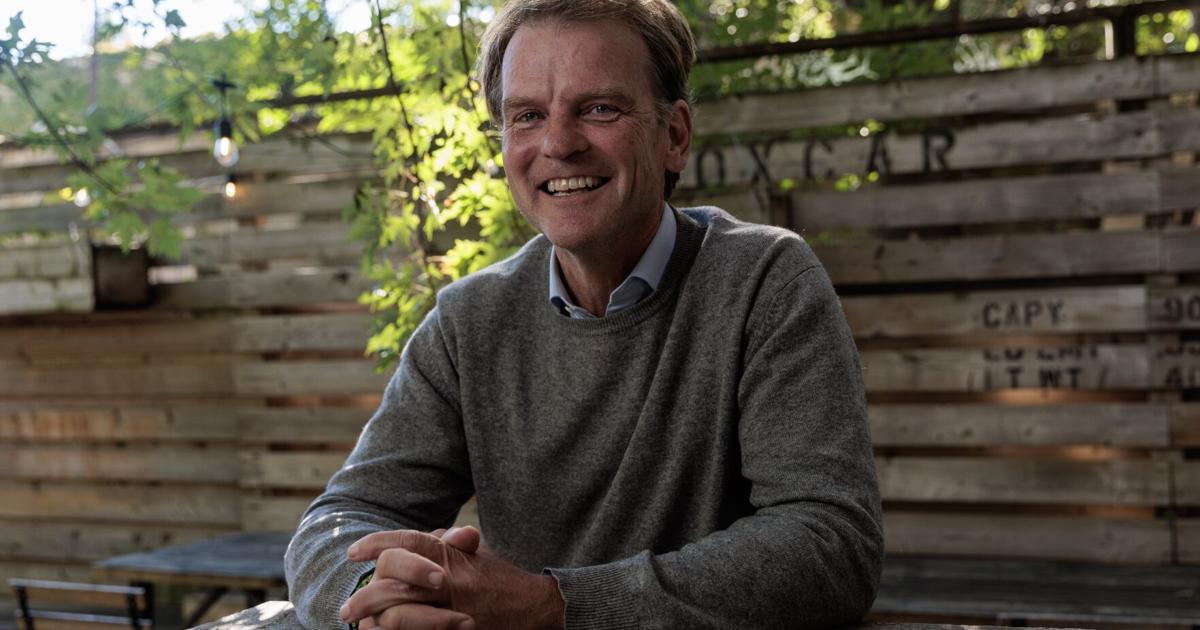
Two weeks before Alexander ended his campaign for mayor, the Star met with him at his local coffee shop, Boxcar Social in Summerhill, for a wide-ranging interview about his career.
In it, he described his thinking during key decision-making moments in Stephen Harper’s cabinet. He talked about why he returned to the public stage. He also broke his silence on an unproven allegation he made in 2024 that shocked the nation — that a veteran Canadian journalist was a Russian intelligence asset.
In search of new beginnings
Alexander showed up to the interview wearing a Royal 22e Régiment jacket and friendship bracelets he said his daughters made him. Personable and worldly, he also seemed haunted by the controversies that marred his short political career.
Whatever his public image; of his crusade against what he called ”barbaric cultural practices,” of his handling of the Syrian refugee crisis, he maintains that he acted with integrity in the House of Commons. He said his opponents viciously mischaracterized his policies.
Alexander was born in Toronto but spent most of his life away from it. He left when he was 16 to study at McGill and didn’t return until he was 41. In the intervening years, he graduated from University of Oxford with a master’s in politics, philosophy and economics and worked as a diplomat in Russia and Afghanistan.
“I never really dreamt of being a diplomat,” he said “But I always knew what I wanted to do was to be involved in politics. ”
For the Conservatives, he moved to Ajax, where he was elected MP in 2011. He had a roller-coaster career in the House of Commons. He was fast-tracked into cabinet after just two years. It ended up being the two final years of Harper’s time as prime minister — and two of its most tumultuous.
He is now 11 years removed from having held public office. Despite a promising start, he only ended up serving one term, losing his seat in 2015 to the same Liberal he’d beaten four years earlier. He tried to succeed Harper as Conservative leader in 2017 but suffered an even worse loss. He placed tenth, narrowly beating businessman Kevin O’Leary.
‘Prepared for a train wreck’
Municipal politics expert Myer Siemiatycki said he remembers a sense of bewilderment and impending doom when Alexander entered the mayoral race. Here was someone with no prior connections to city hall, who is not very deeply rooted in Toronto and who left politics after being subject to global derision for promoting a hotline where Canadians could report their neighbours for “barbaric” cultural acts.
“He declared his candidacy to represent one of the most diverse immigrant populations in the world with that record and association attached to him,” said Siemiatycki, who is a professor emeritus at Toronto Metropolitan University. “People were prepared for a train wreck.”
That never happened. Instead, he said, to many people’s surprise, Alexander presented himself “very credibly.”
“Most notably, he argued for more support for newcomers. He was immigration positive,” he said.
Alexander asserted that he had unexpectedly liberal views beyond this. Answers he submitted to the Star’s Vote Compass survey placed him in the same socially progressive, economically left-wing quadrant of the political compass as Olivia Chow. For example, he “strongly agreed” Toronto needs more bike lanes, funding for libraries, free programs for low-income residents and initiatives to fight climate change.
There was some tension, however, between his survey responses and the fiscally conservative platform he published. He had called for a one-year property tax freeze, higher TTC fares and more enforcement officers on streetcars. On his campaign website, he said he was not for the left or for the right but “for solutions.”
Siemiatycki speculated that Alexander’s true aim wasn’t to torpedo Brad Bradford’s chances by splitting the conservative-leaning vote, as many have suggested he may have been recruited to do.
“My projection would be that Chris Alexander was looking for a pathway back into political life,” he said. “If people recalled he was a player, he might become a player again.”
To what end? Siemiatycki pointed out that both the provincial and federal Conservatives will need new leaders before long.
“Perhaps he’s thinking, ‘There are heights left for me to climb here,’” he said.
At the press conference Alexander hosted to call his campaign off, citing low poll numbers, he told reporters he planned to head back to the private sector, where he’d carry on advising companies and sitting on boards. But he hinted at a possible return to public life.
“I wouldn’t count out a political role in some capacity in the future,” he said.
A controversial past
Alexander was in cabinet during some of the most violent years of the Syrian civil war, the worst humanitarian crisis in half a century. The Harper government’s response to the ensuing refugee crisis was “dismal,” according to Felicia Clement, a researcher of Syrian resettlement around the world.
Nearly four years into the war, at the start of 2015, the Conservatives pledged to bring 10,000 Syrian refugees to Canada. But by election time eight months later, it had only achieved one-tenth of its goal, and most of the refugees had been privately sponsored by families or community organizations. By this point, more than four million Syrians were displaced, according to the UN, almost half of whom were sheltering in Turkey. The sum total of Syrian refugees taken in under Harper was about 2,300.
Canada’s sympathies for Syrians during the election were inflamed by a famous photo of the body of three-year-old Alan Kurdi, who drowned in the Aegean Sea fleeing Syria with his family on a long route to their relatives in Canada.
“Honestly, hand on heart, internal advice that I gave to Harper during the election campaign was that we should have committed to bringing in 100,000 refugees, as quickly as possible,” said Alexander, who admitted he was pleased the Trudeau government ramped up resettlement.
On the campaign trail, Justin Trudeau pledged to resettle 25,000 Syrian refugees. By the end of his first term, he’d brought in about 60,000, and had received international acclaim for advocating for Syrians on the world stage, urging other countries to open their doors as Canada had.
As immigration minister, Alexander got sweeping reforms passed — at the time, they were the most comprehensive in several decades. They have since been largely undone by judges and the succeeding Liberal government.
He presented the infamous ”Zero Tolerance for Barbaric Cultural Practices Act” against the backdrop of these tightening immigration restrictions. While it passed through the House of Commons with broad bipartisan support in 2015, it is looked back on by many, particularly Muslim Canadians, as malicious and xenophobic.
Alexander said the bill’s only aim was to further proscribe forced marriage and child marriage — and that it was the victims of these crimes who came up with the name.
“Our inability to understand what was at stake and what these issues were led to ten years of backsliding for women’s rights around the world,” he said.
In a statement to the Star, Steven Zhou, a spokesperson for the National Council of Canadian Muslims, said the act passing was a painful moment for the community.
“Unfortunately, Canada has seen many political candidates use divisive ideas and rhetoric to gain the upper hand, often with Muslim and other marginalized communities as a target,” he said.
Death threats and Russian spies
Alexander retreated to the private sector after this, only resurfacing once between then and this summer, when he launched his bid for mayor.
It was in 2024, when he made an explosive allegation before Parliament’s Public Safety and National Security Committee. He said David Pugliese, a well-known, well-regarded journalist for the Ottawa Citizen, had been recruited by the KGB in the ‘80s and suggested, without evidence, that he might still be working for Russia. Alexander was protected from legal liability by parliamentary privilege when he made these claims and has largely avoided questions about them from the press ever since.
Two hours before the committee met, Alexander presented it with what he claimed were KGB documents authenticated by a diverse team of experts over the course of a year. He did not name them then and refused to when asked by the Star last month.
In a statement to the Star, Pugliese said Alexander’s “irresponsible actions in falsely accusing me of treason and espionage” caused him and his family to receive death threats and seek police protection. To date, no charges have been levied against him and he remains in his post at the Ottawa Citizen.
After Alexander’s bombshell burst, a researcher and automotive engineer named Giuseppe Bianchin assembled a coterie of experts in graphology and font design, as well as a Ukrainian archivist. Their conclusion was that the documents were forgeries.
Alexander told the Star Bianchin’s involvement was suspicious — although he did not attempt to argue against the specific claims Bianchin’s experts made when prompted to by the Star, including that the calligraphy in the documents is from the same hand, despite the documents allegedly being from different years and involving multiple officers.
“To my mind, the documents, whether authentic or inauthentic or a mixture of both, prove nothing about David Pugliese as an alleged informant or agent for the Russians,” said Wesley Wark, a national security expert and senior fellow at the Centre for International Governance Innovation.
According to the documents, which were later obtained by the Star’s Alex Ballingall, the now defunct Soviet agency took an interest in Pugliese forty years ago, believing he could make a good candidate to become an intelligence asset. The documents do not clearly state whether Pugliese actually ended up working for Russia in any capacity.
The Star asked Alexander last month if he thought Pugliese is still a spy, noting that he denies ever having been one.
“As people in those roles tend to say,” replied Alexander.
Pugliese said Alexander’s sustained suspicion about him “reveals a great deal” about the former minister’s character and suitability to hold public office.
“Alexander has never provided a shred of legitimate evidence to support his false and unhinged claims.”
Faded optimism
Had Alexander been elected mayor, he’d have carried on a family tradition. He said he is the grandson of a former mayor of Huntsville and the descendant of a long-past mayor of Mattawa, Ontario.
His said his father, Bruce, who was a lawyer and public servant, strongly considered running for office, too, in the ‘70s, for the federal Conservatives. He’d known former prime minister Joe Clark from university, Alexander said. But Bruce abandoned his ambition. As his son explained, he didn’t think he could win, and his family would have had to sacrifice to make it happen.
The younger Alexander doesn’t seem to fear failure. To him, running as an interloper underdog is exciting, for a time.
“There’s pressure on you, obviously, because the people who support you aren’t doing it so that you remain in third place,” he said. “But you get to shake things up a little bit. You get underestimated, to some extent, but you get to be yourself.”
The Star got in touch with Alexander again 10 days after he ended his campaign to see how he felt about it, now that he’d had some time to reflect. He said he was “surprised and more than a bit moved” by what he’d heard from people since quitting. It is gratifying, he said, to hear sustained support for his policies. His only regret is not entering the race sooner.
“The bottom line is that I needed to convince more people, faster, that we were the better choice,” he said.

