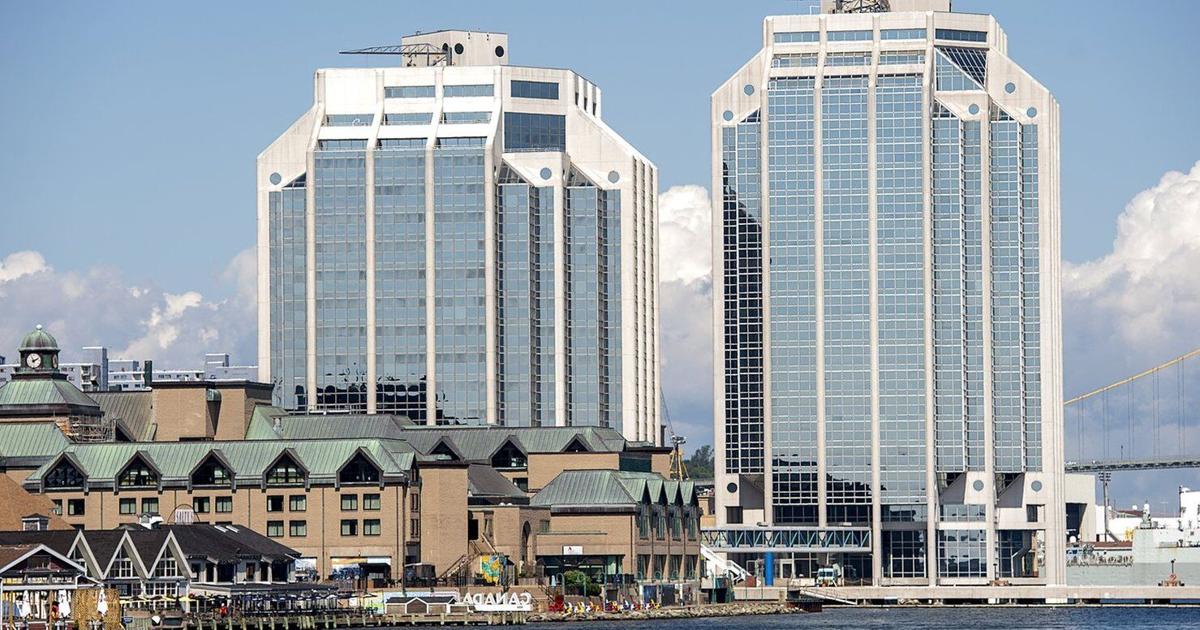
In Halifax, a one-bedroom apartment is listed for rent at $1,750 a month, located in a three-storey building on Tower Road, about three blocks east of Dalhousie University.
Available Oct. 1, the unit of just over 500-square-feet is one of the more affordable options within walking distance of the school currently advertised on the Rentals.ca network.
Other comparable spaces hover around the $2,000-mark or even higher. Just five years ago, that would’ve gotten you a two-bedroom in the city. The average listing price for a single bedroom in September 2021 sat at $1,574 in Halifax, and $2,041 for a two-bedroom.
Real estate watchers in Nova Scotia say rapidly rising rental prices show no sign of slowing down. They point to various factors, ranging from lack of tenant protections to high operating and construction costs.
“Nova Scotia rents have risen every year since 1990, but the pace has really stepped up sharply since 2019,” said Rentals.ca spokesperson Giacomo Ladas.
While British Columbia and Ontario have long held a reputation as some of the priciest real estate markets in Canada, Nova Scotia is now also at the forefront — especially for renters.
In May, Nova Scotia overtook B.C. as the province with the highest average asking rents for apartments and condos, according to a monthly analysis from Rentals.ca and Urbanation, which is based on listing prices across the former’s network.
The Atlantic province has now held that title for four straight months, with landlords’ average ask reaching $2,356 in August. That marked a year-over-year increase of 3.1 per cent, even as the national average dropped 4.8 per cent, continuing a two-year fall.
Advocates say affordability is being held back by rules that place tenants at a disadvantage, with the balance of power tilted in property owners’ favour.
For Mark Culligan, a community legal worker at Dalhousie Legal Aid Service, it comes down to two intertwined variables: Nova Scotia’s system of fixed-term leases, which do not automatically renew beyond a set end date, along with the province’s five per cent rent increase cap.
“That makes for an incredible vulnerability for tenants and especially new tenants,” said Culligan.
“In Nova Scotia, unlike other provinces, the tenant has no right to renew. So once that end date happens, it’s just up to the landlord to determine whether or not they’re going to offer a new lease.”
If a landlord decides to rent out a unit to a new tenant rather than provide the existing one a chance to renew, they can increase rents beyond the five per cent cap. Culligan noted that figure is already above rent control ceilings set by other provinces — such as B.C.‘s 2.2 per cent and Ontario’s 1.9 per cent caps for 2027 — that are more closely tied to the rate of inflation.
Culligan said the dynamic discourages active tenants from raising issues during their terms, for instance around the need for repairs, lest they risk being “punished” when it comes time for renewal.
“That creates a real easy tool for landlords to turn over units, with a massive financial incentive for landlords to raise rents,” he said.
Another contributing factor is the concentration of ownership across large rental properties. Earlier this month, Dalhousie Legal Aid published a report analyzing the ownership structure of around 1,400 large rental properties representing more than 50,000 units in the Halifax area.
The Who Owns Halifax report found just 20 landlords own 56 per cent of those rental units and that financial firms alone control nearly a quarter of units, revealing a market “increasingly controlled by large corporate, chain and financial landlords.”
Those findings echo separate research published in July by Statistics Canada on investor-owned residential properties in New Brunswick, along with Prince Edward Island, Nova Scotia, Ontario, Manitoba and B.C., in 2022.
Author of the StatCan report and economist Joanie Fontaine said Nova Scotia was the lone province of those six in which institutional investors owned the largest share of investment properties. In the rest of the provinces, individuals owned the largest share of homes where they did not reside.
Among Nova Scotia rental properties, 38 per cent of their assessed value was owned by institutional investors.
Culligan said those firms are well-positioned to profit in the province’s largest city due to its concentration of rental demand. He described Halifax’s downtown core as a dense area where much of the city’s population — especially those who rely on transit to get to class or work — want to live.
“Halifax has a huge student population, especially relative to its overall population, so there’s a lot of institutional investors who are building close to our educational centres and when new people are moving in, they’re often paying asking rents that are very high,” he said.
“People are really limited in terms of how far they can live away from the universities and the medical centres and the military bases, so I think that exacerbates the kind of market influence that some of these larger actors have.”
Compounding those issues is how long it’s taking for new projects to get off the ground. Ladas said supply is lagging as rental construction in Halifax takes about 70 per cent longer than the national average, driven by rising land, permitting and labour costs.
“The cost to build here, I think, is potentially more expensive than it is in the centre of Canada,” said Scott Moulton, a Halifax-based real estate agent for Royal LePage Atlantic.
“The Halifax peninsula is not that big and the infrastructure, traffic, everything is not that sophisticated. So we can only build up and that has to be concrete, that has to be a bigger engineering product.”
Those projects tend to be geared toward more affluent renters, as opposed to Halifax’s large demographic of students who have limited budgets, according to Ladas.
“There is a lot of supply coming, they just skew towards larger units,” he said.
Existing landlords face their own challenges when it comes to operating expenses, said Kevin Russell, executive director of Rental Housing Providers Nova Scotia.
He pointed to rising property taxes in Halifax, which have hit owners of larger buildings particularly hard since they don’t qualify for a cap that restricts taxable property assessment increases to inflation. Other day-to-day costs are also adding up, said Russell.
“Oil is up 40 per cent this year, so it’s going to be an expensive winter,” said Russell, whose group represents residential investment property owners managing more than 50,000 apartment rental units combined in the province.
“Of course, regular financing and repair and maintenance costs, these have all had double-digit increases, so it makes it tough.”
Russell said the province’s rent increase cap, which is set to expire at the end of 2027, has also led to a “distorted” market. With rent hikes capped at five per cent, he said new renters face higher entry prices in order to “subsidize” those who have stayed put.
“When you go to those (online rental platforms), all you see is high-end, high-amenity apartments. You don’t see the affordable apartments on rent because they’re full … or close to it,” he said.
“Those who are under the cap are not moving. They’re staying put, which reduces the availability of a number of units.”
This report by The Canadian Press was first published Sept. 27, 2026.