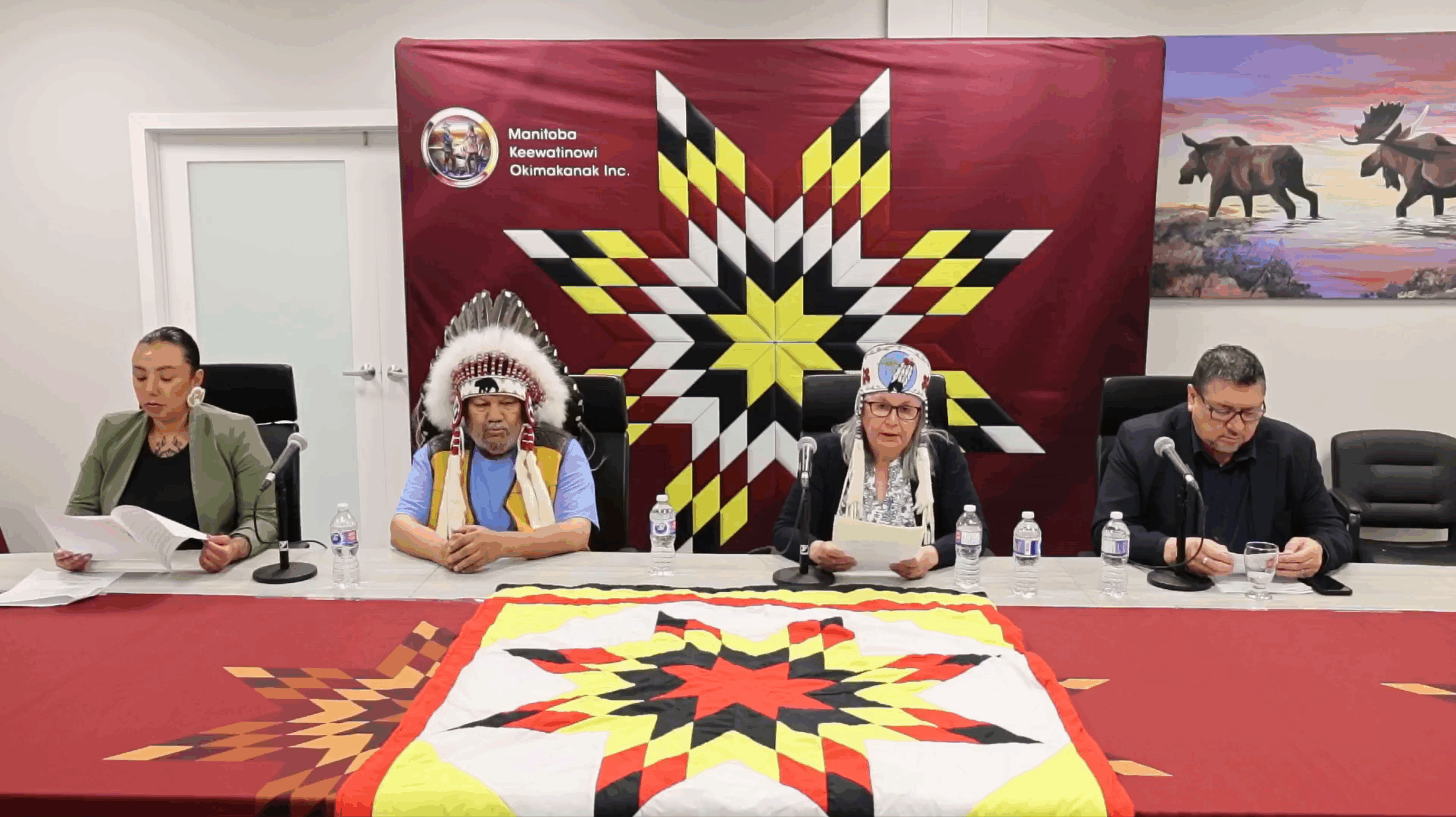
Manitoba Indigenous leaders denounced the province’s wildfire plan released Tuesday, saying issues affecting First Nations communities have not been resolved.
The province released an interim report following the 2025 wildfire season, one of the worst in decades. First Nations leaders say that season exposed major gaps, especially in northern infrastructure, evacuation response, and how decisions are made.
“How many press conferences do we need to have? How loud do we need to speak when we say that we have the solutions, and our leadership know what they need for their communities?” said Kyra Wilson, Grand Chief, Assembly of Manitoba Chiefs.
First Nation leaders want to be directly involved in emergency planning.
They say, last year, thousands of First Nation residents were displaced, many for weeks or even months, facing power outages, language barriers while they received limited supports for evacuation.
Leaders say the impact of this went far beyond displacement, affecting mental health, cultural connections, and daily life.
“We lost around 30 of our loved ones, we couldn’t even go to the funerals, only a handful attended,” Chief Gordie Bear, Mathias Colomb Cree Nation.
Pimicikamak Cree Nation Chief David Monias also said that the province’s One Manitoba approach does not reflect the realities of remote communities, where infrastructure gaps and jurisdictional issues can delay response.
“The wildfire was not just a natural disaster. To us, it was more like a systems test as well. The test the system of the province and also Canadian system, the wildfire system, and how it works. And unfortunately, it failed for us. It was a failure,” said Monias.
He also raised concerns about evacuation conditions, including families being moved between hotels.
“You cannot have people be moved around from place to place every day and that’s what was happening,” Monias said.