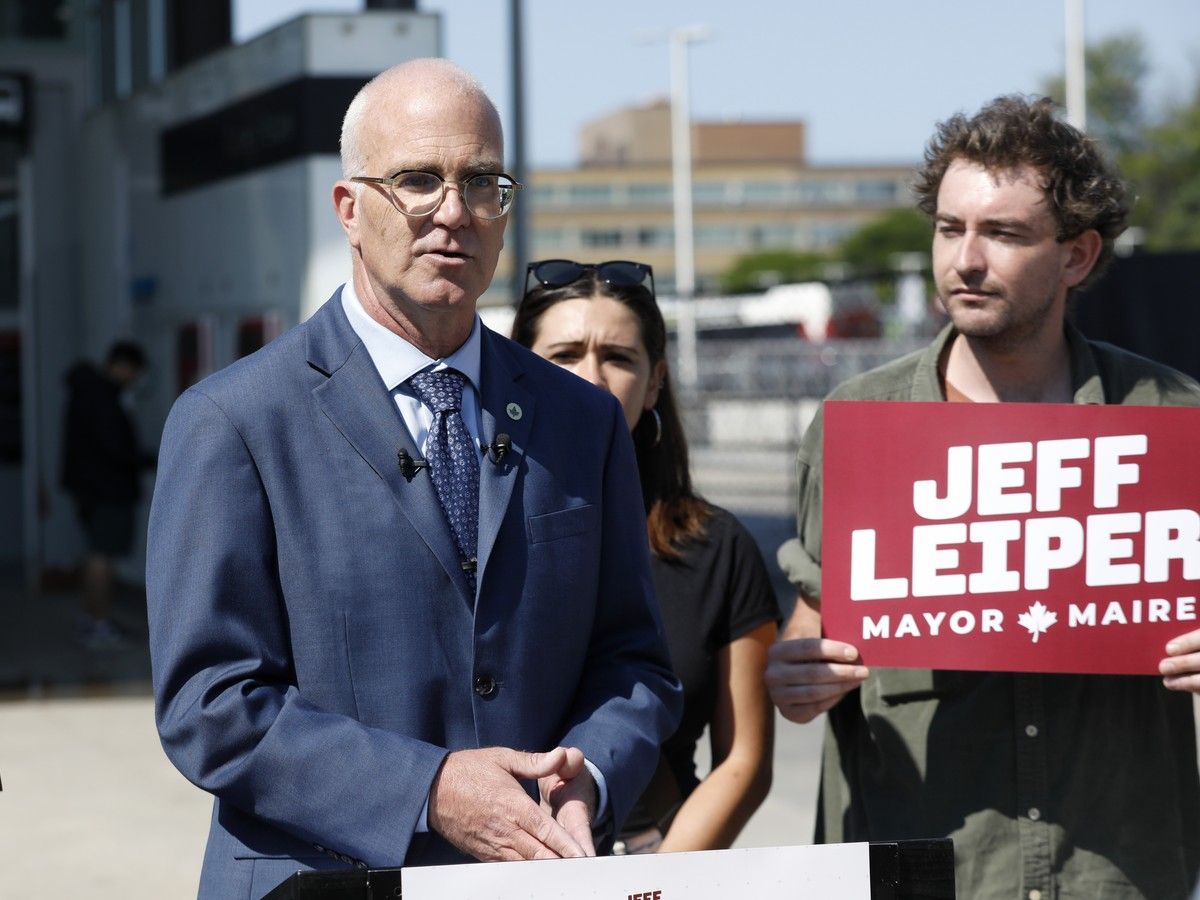
Mayoral candidate Jeff Leiper is promising to reverse recent cuts to the city’s bus service and make routes more reliable and frequent if elected this fall.
Leiper unveiled a five-part transit plan outside Tunney’s Pasture station on Aug. 4, arguing unreliable buses have left riders worried about getting to work or school on time.
“Every ghost bus and misconnection is time that is stolen from family and friends and your career,” Leiper said.
Leiper’s plan would restore a citizen representative for transit riders on the city’s transit committee and introduce a “transit service guarantee” with published standards for on-time performance and service frequency.
He also pledged to reverse frequency and route reductions introduced through the New Ways to Bus network overhaul, expand dedicated bus lanes, advance the Baseline bus rapid transit project and establish a long-term fleet replacement plan.
“The solution to a lack of buses is more buses,” Leiper said.
“I’ll establish a long-term fleet replacement strategy and maintenance plan so that the system has the vehicles it needs today and for years to come.”
The New Ways to Bus overhaul, introduced in 2025, changed more than 100 bus routes across the city and was designed to reduce the transit operating budget by about $10 million.
But a June audit by the city’s auditor general found decisions behind the overhaul were mainly driven by budget considerations rather than service improvements. The audit also found that the overhaul was based on outdated data.
Leiper said reversing the New Ways to Bus cuts would cost about $10 million. He said the funding could be found by reprioritizing spending within the city’s budget, while larger fleet purchases would require additional support from the provincial and federal governments.
He did not promise to freeze or reduce transit fares, despite fellow mayoral candidate Neil Saravanamuttoo proposing a “Buck a Ride” fare plan.
Instead, Leiper said fares should be kept “as low as possible,” but argued reducing them before stabilizing the system would remove revenue needed to improve service.
“Right now, I’m focused on delivering a service that is worth paying for, one that is reliable and convenient,” he said.

Leiper made the announcement flanked by supporters holding campaign signs. He struggled to answer questions in French from reporters, apologizing on multiple occasions.
Noah Vineberg, president of Amalgamated Transit Union Local 279, which represents OC Transpo workers, attended the announcement but stopped short of endorsing Leiper.
Vineberg said the union rarely endorses municipal candidates, although it could consider doing so later in the campaign if a candidate’s platform clearly serves its members and Ottawa residents.
Transit is expected to be a major issue in this fall’s municipal election as federal public servants increased their in-office presence in early July and students will soon return to school, placing additional pressure on OC Transpo.
The city has approved a 48-point action plan aimed at preparing the transit system for the increased demand.
Mayor Mark Sutcliffe , whom Leiper will be challenging, recently backtracked on a communications campaign within the plan after receiving backlash. That strategy would have looked to convince public servants and other workers to “extend their time” downtown.
Other parts of the 48-point plan included adding bus trips on busy routes and increasing O-Train Line 1 service.
Leiper said he supported the city’s plan but questioned whether the existing bus fleet and transit network would be able to meet the added demand.
Leiper was also cautious about the city’s planned negotiations with Metrolinx, the Ontario government agency that operates GO Transit and oversees major transit projects, over a promised upload of Ottawa’s LRT system.
Supporters say such a deal could save the city billions of dollars over the coming decades, but Leiper said the outcome remains uncertain.
“We have an agreement to talk to Metrolinx and certainly I’m not going to cut those conversations off when I’m mayor,” Leiper said. “But it is far from certain that Metrolinx is going to be willing to cut us the deal that city council has said it wants.”
Leiper, who has served as a city councillor for Kitchissippi since 2014 during years of transit challenges, acknowledged there was “a lot of blame to go around” for Ottawa’s transit problems.
He argued, however, that he had consistently opposed transit cuts from his council seat and could accomplish more with a citywide mandate as mayor.
“There is only so much that one councillor can do,” Leiper said. “I hope what residents hear is that I understand their frustrations and that I am committed to delivering the transit service that they deserve.”
Take control of your search results. Make the Ottawa Citizen a preferred source on Google and see verified local reporting first.