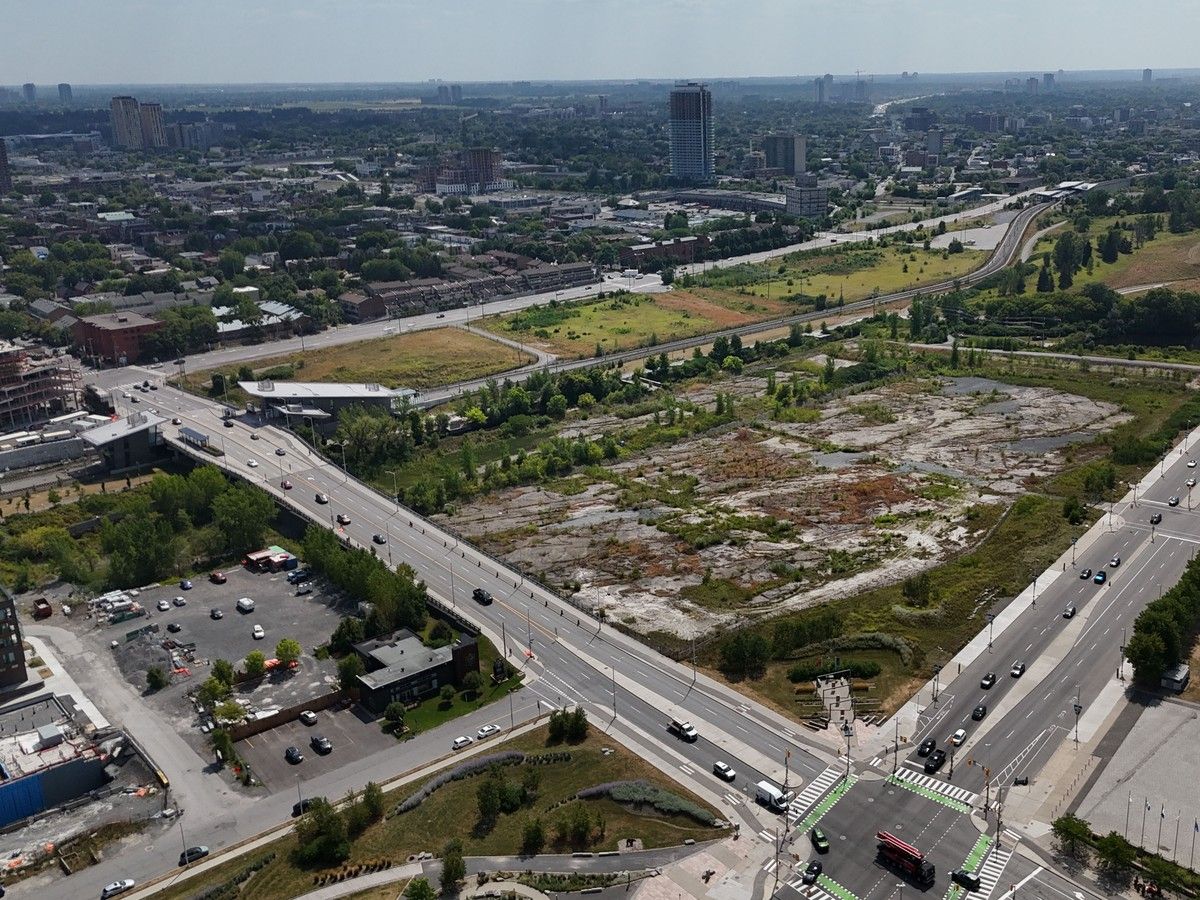
On the Flats of Lebreton , they’re building a neighbourhood proper.
Take it all in. This is what’s been built, what’s being built and what may be built in the name of a pedestrian-first neighbourhood in the heart of the city.
The Flats are an area — just shy of 72 acres — steeped in history on the south bank of the Ottawa River.
The NCC land is now, finally, being transformed from a long-time wasteland with contaminated soil back into a community under an ambitious plan.
It was once settled by working-class French, Irish and Italian immigrants on Algonquin land .
Several names you might know from street signs and places named after them have important connections to the Flats. Names like LeBreton, Eddy and Booth.
That’s John LeBreton from England, but raised in Newfoundland and served as a captain in the infantry long before Confederation.
After LeBreton bought the land in the 1820s, he was later accused of using inside information to flip it to the British government because he thought he knew that exact parcel of land was going to be used for a proposed canal. It was after these accusations that the plans were changed and the Rideau Canal we know today was born. Now known for boating in the summer and skating in the winter, it’s nowhere near The Flats.
Lebreton never lived in The Flats named after him. He lived in Nepean, where he was an early settler to the area and ran a farm.
E.B. Eddy, or Ezra Butler Eddy, an American from Vermont, was famous for his matchstick and paper company and did big business on The Flats, but like LeBreton, he didn’t live there.
Quebec lumber baron J.R. Booth did live in The Flats in the same neighbourhood as the folks who worked at his mills and railway.
The Flats have been levelled twice. The first time was in 1899 when a chimney fire in Hull got out of control and, with high winds, carried across the Ottawa River and burned down much of The Flats.
It left 40 per cent of Hull residents homeless and 14 per cent of folks in The Flats without a place to live.
But they rebuilt and it became a tight, working-class neighbourhood steeped in diversity and adversity.
Rail yards, factories, single-family homes (sans condos), and all the shops that specialized in their trade. The butcher, the shoemaker and the wedding-cake baker.
Taverns, hotels, garages, and corner stores. And everything was within walking distance in a pedestrian-first neighbourhood.
The second time the neighbourhood was levelled was deliberate.
The ruling class back in 1962, under Deifenbaker’s Progressive Conservative government, looked at the hardscrabble neighbourhood as an eyesore, and one too close to Parliament Hill.
So the NCC expropriated all of it and demolished the whole space. About 2,800 people were kicked out of their homes, and hundreds of businesses shut down.
It was described at the time as a crime against poverty.
Today, The Flats is getting closer to huge changes with hopes of making it a big destination and a neighbourhood once more.
The under-construction Ādisōke on Albert Street is no longer owned by the NCC and not part of the master plan for the Flats; the joint project between Library and Archives Canada and the Ottawa Public Library will be a big draw and sits just on the edge of the neighbourhood.
From picnic tables, wading pools, basketball courts to a hardware store, drugstore and grocery.
It’s not every day a new neighbourhood comes with an NHL rink and affordable housing on the same street. It’s all happening.
Related
- NCC CEO says talks with Senators moving in right direction, but no timeline for shovels in the ground
- Ottawa Senators close to economic agreement with Algonquin Anishinabe Nation at LeBreton Flats