

It’s one of the most astonishing fight sequences you’ll ever see on stage: the second-act rumble in “The Outsiders,” with bodies flying like aerial projectiles, punches landing with the weight of a freight train and pelting rain kicking up gravel from the floor.
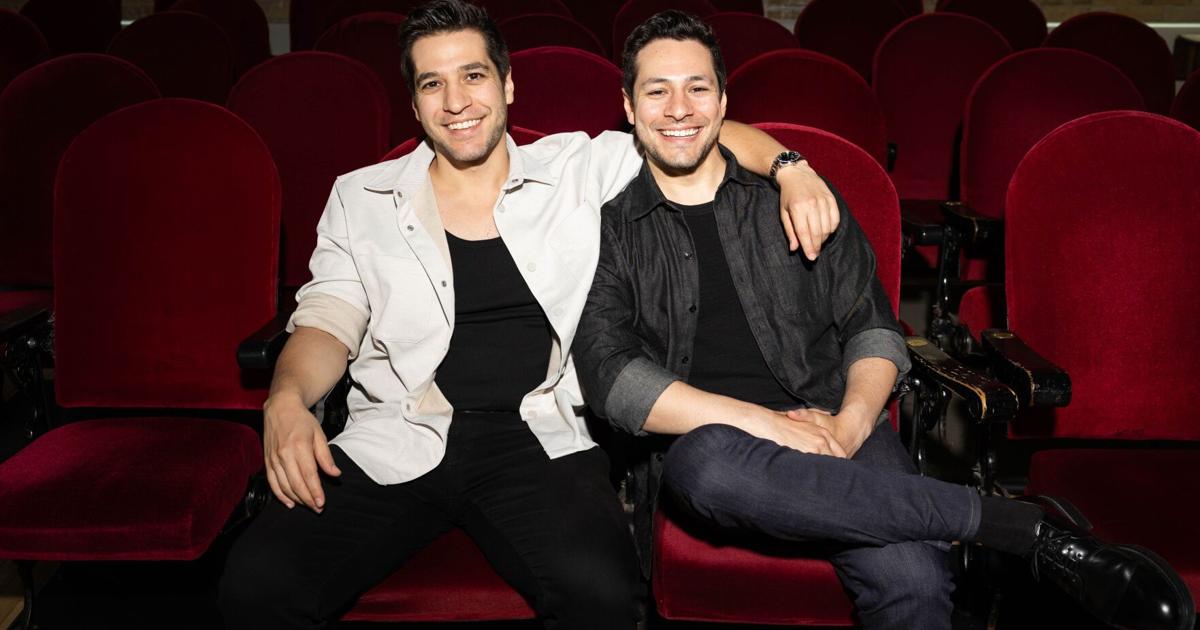
The five-minute scene marks the climax of this musical adaptation of S.E. Hinton’s seminal novel of the same name, about two rival gangs in 1960s Oklahoma. And it was all dreamt up by Toronto brothers and co-choreographers Rick and Jeff Kuperman, who received a Tony nomination for their work on the show in 2024.
Though now based in New York City, the brothers recently returned to Toronto for the musical’s Canadian premiere at Mirvish’s Princess of Wales Theatre. The Star spoke with the Kupermans about their upbringing, creative partnership and work on “The Outsiders.”
Welcome back home! I know you’re both from Toronto, but where exactly did you grow up?
Rick: We were both born in North York, and then we grew up in Vaughan and Thornhill. But we went to school at the University of Toronto Schools, and trained at Vlad’s Dance Company in Richmond Hill.
How did you get into dance?
Jeff: We were in gymnastics for a bit, and I think our mother was just looking for more places to stash us. We were probably five or six years old, and we were doing all types of dance — jazz, tap, acrobatics, ballet. By the time we were 11 or 12, we also started doing martial arts, and we found that those are very complementary disciplines.
After high school in Toronto, I know both of you also went to Harvard and Princeton.
Jeff: Yeah, I went to Princeton and Rick went to Harvard.
What did you study?
Rick: I did my undergrad in moral philosophy, with a minor in dramatic arts.
Jeff: And I studied English literature, and also did a minor in dramatic arts.
So from there, how did you get into choreography?
Rick: In undergrad, there was no performing arts major at Harvard, but there was a pretty robust extracurricular life, and I remember learning the choreography of some of the greats, like Martha Graham and Alvin Ailey. And I just loved that spirit of creation, getting to build your own pieces and numbers.
The other thing that was happening was that Jeff and I were also acting in theatre, getting exposed to how choreography functions inside an evening-length work that’s trying to tell a story, compared to a concert dance that can be very abstract. When we realized that choreography doesn’t just have to be 5-6-7-8 — that it’s instead the way characters transition from location to location, it’s rhythm, it’s pacing, it’s tension and release, and all these fundamental building blocks of the theatre — that was really life-changing.
Jeff: Rick, I don’t think I’ve mentioned this to you in a long time, but the seed for me came when I was 16 or 17. It was the end of a dance season, coming off a big competition, and my dance teacher and I were in an elevator when he said, “Next year, you should choreograph. I want to see what’s in that screwed up head of yours.” That’s when I realized that I don’t have to just be a vessel for choreography, but it can come from me as well.
So, how did you start working together?
Rick: Though we went to different schools, every summer we’d meet in New York City, and we’d work on a piece of theatre at an off-off-Broadway house — like 99 seats, really DIY, very low budget. Then, we’d go our separate ways back to school, work on our own student theatre projects, then come back together over the summer, on and on and on. And what we realized was that working together ended up being better at the end of the day, and we also had way more fun doing it.
How do you two work together? Is one person more focused on the bigger picture, while the other is more focused on the details?
Jeff: When we first started working together, we were fighting all the time, going to throw each other out the window, as our cast stood off to the side watching us almost kill each other. It was then that we realized, wait a second, if we’re going to do this properly, we have to figure out how to collaborate with each other.
That was the best gift I’ve ever received. Because flexing that collaborative muscle with your brother, making mistakes, figuring it out, hurting their feelings — and then figuring out how to not hurt the other person’s feelings and coming to this equilibrium — is just the best training ground to be a collaborator in general.
Rick: I’ll just jump in to say that building a healthy culture in the theatre is really about letting the best idea rise to the top, not caring where it comes from. And what Jeff was describing was an opportunity to practice that on a micro scale between the two of us, and then taking that insight and scaling it up to a room of tens or at times hundreds of collaborators working on a piece of theatre.
That’s a great segue into “The Outsiders,” which was such a massive undertaking with so many collaborators. I want to zoom in specifically on the rumble scene. How did you develop that sequence and the specific vocabulary for it?
Rick: The rumble was one of the first pieces of the show that we started to research because it’s the climactic part of the overall story. It also required a lot of imagination because when S.E. Hinton wrote the rumble in the novel, a lot of the work that’s done happens inside the minds of the readers. When Francis Ford Coppola shot the rumble, a lot of the magic lives in the edit. But we don’t have an edit in the theatre. Everything is happening live in front of the audience the entire time. So, we needed to explore another vocabulary that would allow us to elevate the violence, to get inside of Ponyboy’s mind and his nightmare of the experience.
Jeff: The thing that really sells the impression of violence is the sound — the hits, the punches, the impact. So very early on, we realized that we needed to tell the story aurally, in addition to choreographically. We scored that scene in the room, and then proliferated that idea throughout the show, so that everything led to that moment.
Tell me about some of the safety mechanisms you’ve built into the choreography of that scene.
Jeff: We built the rumble in what we call phases. Phase 1 is like a Hieronymus Bosch painting, where you can zoom in on any couple and get the story of their struggle. It’s 16 bodies just wailing on each other — with someone flipping this way, someone being pulled that way, all while it’s raining. The whole experience is chaos. So, we built what we call these stop gaps, which help the actors sync up with each other. Everyone runs a section of the fight, and then they hold in a position until they have a signal that says they’re in the next part of the fight. At a certain point, the rumble transitions into a more expressionistic vocabulary, and that’s when you hear the sound of the train, which gives us a metronome.
Rick: That metronome of the train is very intuitive for a company to sync up to because you have a downbeat. But phase one of the rumble has no downbeat. There is no rhythm, so that’s why the stop gaps are important.
You developed the show over several years. In particular, there were a lot of changes made between the show’s debut at the La Jolla Playhouse in California and Broadway. What did that process look like?
Rick: Some Broadway workflows can get kind of siloed: the composers work on the score; the book writers work on the book; and the choreographers work on the choreography. What was really unique about the culture of “The Outsiders,” and a lot of that is credit to our director, Danya Taymor, was that we tried to break those silos as much as possible.
In between our La Jolla and Broadway runs, we actually spent a lot of time at (co-book writer) Adam Rapp’s house. We lived together, we cooked for one another, we cleaned for one another, and we just sat there … and scrubbed through the show. The point was that it wasn’t everyone trying to solve the problem from their silos. It was really a collective looking at what was the best lever we could pull to address a problem in the show.
It almost sounds like a creative retreat.
Jeff: Doing this production, it really clicked for me that the one ingredient of a good show is literally just time. It’s time for those happy accidents to happen.
Over the years, you’ve really made your creative partnership such a success. But it’s also such a unique collaboration. So, I’m curious: What do you admire most about each other?
Rick: I admire Jeff’s discipline. What I mean is if Jeff has an idea about how something might sound, how a transition might go, he will just grab a computer, create that sequence and mock it up. That technical fluency is such a rarity and a huge gift because it lets us work very quickly.
Jeff: What I admire about Rick, and something I’m constantly learning from him, are his leadership skills, especially his way of being OK with being uncomfortable — like having a necessary but uncomfortable conversation that makes everyone feel better afterwards or going into a process without knowing the answer.
Rick: There’s a sort of yin-yang quality here between the two of us. It’s really cool to have a partner who pulls you in one direction, and for you to pull in the other.
This interview has been edited for length and clarity.
“The Outsiders” runs until July 26 at the Princess of Wales Theatre, 300 King St. E. Visit mirvish.com or call 1800-461-3333 for tickets and more information.
Error! Sorry, there was an error processing your request.
There was a problem with the recaptcha. Please try again.
You may unsubscribe at any time. By signing up, you agree to our terms of use and privacy policy. This site is protected by reCAPTCHA and the Google privacy policy and terms of service apply.
Want more of the latest from us? Sign up for more at our newsletter page.

