The province has determined that Birla Carbon was the primary source of the mysterious black soot that blanketed large swaths of Hamilton last month.
Hundreds of residents started complaining of an unknown grime covering their homes and yards shortly after Canada Day, sharing anecdotes and photos of black-stained skin, clothes and even animal fur.
While soot is a long-running issue in Hamilton, many shared that last month’s gunk was the worst they’d seen in years. It also reached parts of the Mountain, an area not known for experiencing this kind of fallout.
The widespread outcry led Ontario’s Ministry of the Environment, Conservation and Parks (MECP) to launch an investigation.
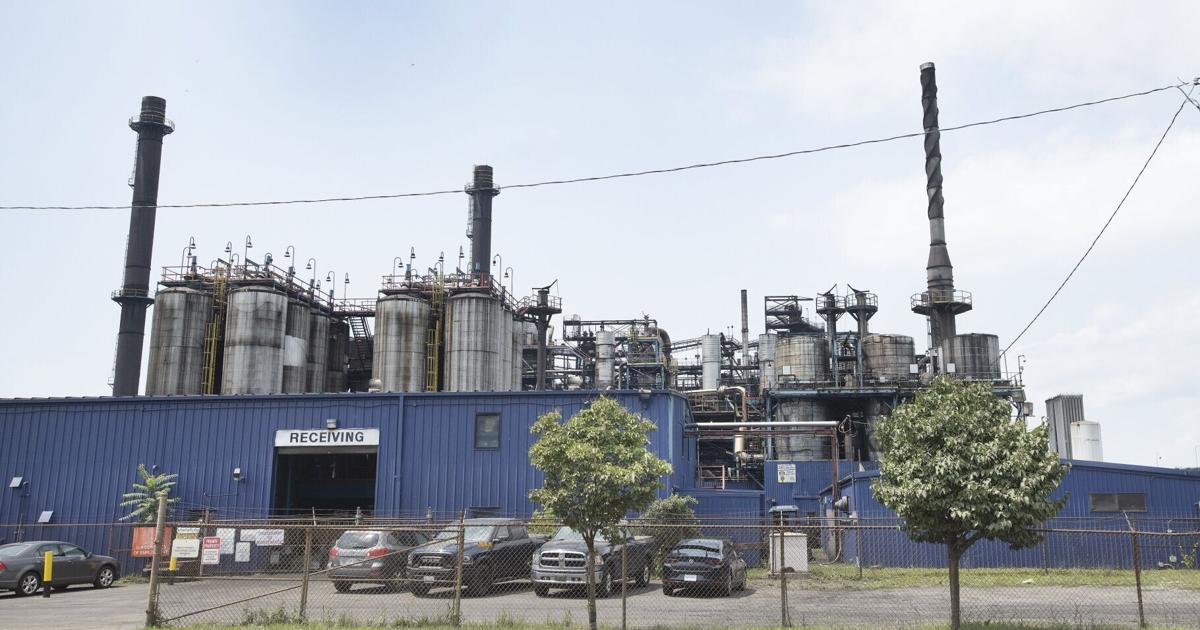
In an email to The Spectator Tuesday evening, an MECP spokesperson said the ministry had found that emissions from Birla Carbon, a carbon black manufacturer on Parkdale Avenue North, were the “primary source” for the soot.
“As a result, we have referred Birla for formal investigation by the ministry’s Environmental Investigations and Enforcement Branch for potential violations of Ontario’s environmental laws,” the spokesperson shared, adding that the company will need to take “all necessary action” to avoid future incidents.
Birla did not immediately respond to a request for comment.
What caused the emissions — and their exact contents — remain unclear, and the ministry did not immediately reply when asked for clarification. Still, the MECP’s findings confirm what many residents suspected: that the soot was fallout from Hamilton’s industrial waterfront, home to heavy industry such as steelmaking and carbon black production.
Before Tuesday, Birla and other companies with operations along the water — Rain Carbon, Stelco and ArcelorMittal Dofasco — had told The Spectator that their facilities weren’t behind the soot.
Word that the province had pinpointed a source follows weeks of pressure from residents and local politicians who called on the ministry to share more about its probe as they voiced frustration over not knowing what they were breathing in or where it was coming from. Many pointed back to 2024, when a provincial probe into similar complaints of soot wasn’t widely publicized, with the ministry instead simply attributing the fallout mainly to typical road dust.
The finding comes a week after Hamilton Public Health Services said it received a report on the MECP investigation. That document has yet to be released, with public health telling The Spectator last week that staff are reviewing the findings.
The MECP spokesperson deferred any health-related questions to the city in their email Tuesday.
The ministry’s comments also come on the heels of an update on a separate study into Hamilton’s long-standing soot sorrows.
On Monday, the research team behind the aptly named “What’s the Grime” study — a collaboration between McMaster University and Environment Hamilton that started in summer 2024 — announced that they’d submitted the first of their findings for peer review and publication.
Those results, which are based on soot samples gathered in late 2024, also found a strong link between the fallout and industrial emissions.