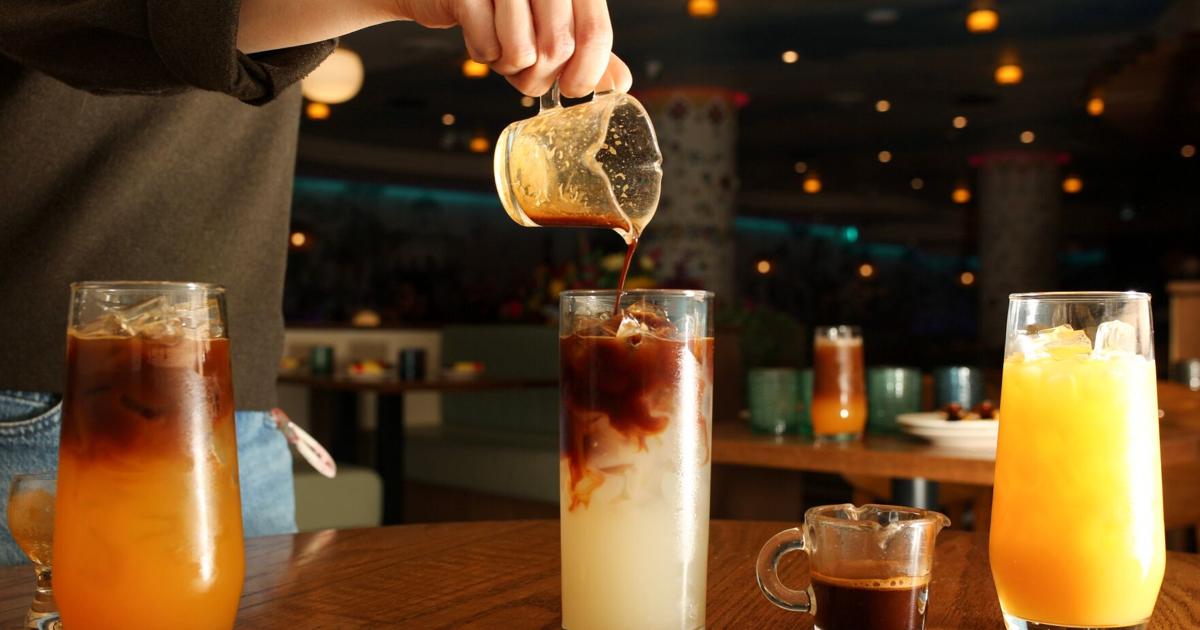
The double shot of espresso poured on top of the tangerine juice gradually seeps downward. It’s mesmerizing to look at as I wait for my breakfast burrito at Masa Deli, the cheery orange-yellow mixing with the dark brown to create a pleasant amber colour. It’s a sunrise unfolding in a glass.
It tastes like an Aperol spritz: citrusy and sweet, but with the earthy bitterness of coffee in lieu of the tonic aftertaste. The person who made it described it as tasting like a Terry’s Chocolate Orange.
Coffee trends have moved through distinct eras over the past few decades. The ‘90s brought frappuccinos and iced cappuccinos into mainstream café culture, followed in the 2000s by third-wave coffee’s emphasis on brewing methods, bean origin and flavour clarity. More recently, fruity coffee combinations have begun appearing across Toronto, from major chains to independent cafés, pairing espresso with tangerine, orange, passionfruit and lychee juices.
Could this be the drink of the summer?
At Masa Deli, owner Reza Azucena says the drink has been on the menu since 2024, after customers began ordering espresso and tangerine juice separately and combining them themselves. He said he is not sure where the trend originated, noting that similar drinks often appear in different cities around the world before landing in Toronto. “We sell a few dozen a week, they have their audience. Mostly millennials and young women.”
Elsewhere in the city, the combination is gaining traction. Project Seoul, which opened in downtown Chinatown last year, serves a sunset brew, which is orange juice topped with an espresso shot. Thai takeout coffee stall Plearn Cafe downtown makes iced coffees with passionfruit, orange and lychee juices. Martin Espresso Bar in Dufferin Grove makes an iced passionfruit cappuccino.
The appeal is not just flavour, but format. The drinks often form a layered ombré effect as the denser juice and espresso settle into each other, making them highly photogenic and closer in feel to mocktails than traditional coffee. That positioning fits a broader shift in drinking habits, as more Canadian adults reduce alcohol consumption and look for complex non-alcoholic alternatives that still feel celebratory.
Tony Wong, who owns the family-run Vietnamese restaurant Vietnoms and is also a food content creator, says coffee and matcha-themed social events have become increasingly common alongside the rise of mocktails. “The trend now is coffee and matcha-themed parties, and most restaurants have mocktails now,” Wong said. “If people don’t drink but are OK with caffeine, you’re still getting that rush. Juice is used as a mixer for alcohol, so why not coffee and matcha?”
Wong said the trend has also become more common in the GTA alongside the mainstreaming of Asian flavours, exemplified by the ubiquity of matcha, ube and pandan, as well as the influx of Asian coffee chains that take a more carte blanche approach to flavoured coffees. In 2023, Beijing-based Cotti Coffee opened its first Toronto location and added an orange grapefruit Americano on its summer drink menu. Hanoi-based Cong Caphe arrived the same year with its iced coconut coffees, while Busan-based Blue Shaak recently launched in Canada serving drinks like peach iced tea topped with espresso.
Combining coffee and fruit is not entirely new. The drinks had a brief surge of TikTok attention in 2022, but variations have long existed in cafés across Southeast Asia, Europe and Latin America with names like Bumblebee Coffee, Good Morning Vietnam and OJ Express. In Mexico, there’s café de olla: hot coffee with aromatics and a hint of orange.
Wong said pairing fruit with coffee has long been a tradition in Vietnamese cuisine since the country is a major producer of both. In 2023 he offered an off-menu drink of espresso with tonic water and yuzu jam, insisting the bitter and fruity combo will soon be more widely seen in cafes. He was on to something, as President’s Choice also sold a version of it in 2021 while Starbucks has a recipe for an Orange Espresso Tonic on its site. On Vietnom’s current menu, you can add an espresso shot to coconut, durian and avocado smoothies, as well as order matcha with coconut water and matcha with mango purée.
“We’re big on coffee and fruit, and it’s hot (in Vietnam) so we want refreshing, cold drinks like slushies and smoothies,” said Wong. He said tropical fruits, especially citrus, have more robust flavours that can’t be muffled by the bitterness of coffee and matcha.
Fruity coffees are low-barrier drink trend. There’s no special equipment or ingredients involved, and any cafe or home brewer can make it. The challenge is balance: too much juice overwhelms the espresso, while too little can flatten the fruit entirely. Done well, orange juice and espresso can taste like a morning mocktail, while berry purées push the drink closer to dessert territory.
For cafés, the appeal lies in flexibility. Fruity coffees offer a relatively simple way to add individuality to a menu without going full-on Labubu-Matcha-Dubai-Chocolate. It’s a small category, but one that is steadily spreading across Toronto cafés just in time for summer.