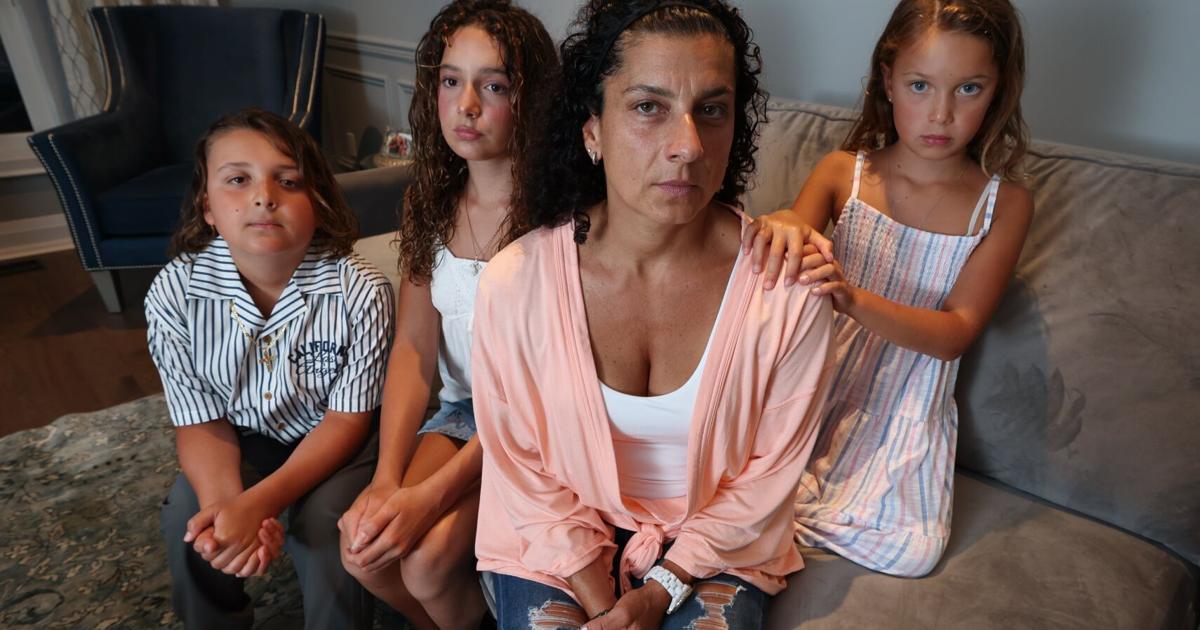
Melissa Colalillo spent $3,520 last month to fly with her three young children to visit family in Florida.
The Toronto mom, however, did not budget for public humiliation, threats of being blacklisted from air travel or watching U.S. customs officials come to her family’s rescue.
“What is really troubling in this case is the actual victim is being punished,” says Gabor Lukacs, founder of Air Passenger Rights. “The whole thing sounds Kafka-esque. She has to fight this at trial.”
Just before 8 a.m., on June 17, Colalillo and her children — seven, nine and 12 — boarded Air Canada Flight AC 1624 from Toronto to Fort Lauderdale and headed to the seats they were assigned in row 40.
But two of the seats were already occupied — a man was at the window, a woman on the aisle. In the row behind them was a lone passenger in the middle seat.
“I thought to myself, maybe their original seats were behind me, and they didn’t want to sit there because there’s already a lady sitting in the middle,” Colalillo said.
‘I don’t care where we sit, I just don’t want to be separated from the kids’
“I didn’t engage (the woman on the aisle) or say she was in my seat.”
Colalillo approached an airline attendant at the back of the plane, and showed him the family’s boarding passes.
“He says, ‘No problem. We’ll have this settled in a few minutes,’ ” Colalillo recounts.
As the crew attempted to resolve the seating issue, the woman in the aisle seat became visibly unco-operative, Colalillo says.
Seeking a quick resolution, Colalillo told the crew, “Listen, I don’t care where we sit, I just don’t want to be separated from the kids.”
The crew moved the family into the row directly behind their original seats, shifting the middle-seat passenger forward. Colalillo’s eldest daughter Sofia took the aisle seat across the way.
As Colalillo stowed the family’s bags in the overhead bins, she says the woman in the aisle seat became hostile, accusing her of trying to separate her from her husband.
“If we weren’t on this plane,” Colalillo says the woman told her, “I’d deal with you a different way.”
Twice, Colalillo says, cabin crew intervened to talk with the woman on the aisle. When the woman continued her tirade and threatened to slap Colalillo, the mom says she appealed to the cabin crew, once more, for help.
“I said, ‘I’m sorry, I’m not trying to make your life difficult … She’s still going off uttering threats my kids can hear,” Colalillo told the attendants. “She’s making me feel very uncomfortable. I don’t feel safe.”
That is when the situation took a bizarre turn.
According to Colalillo, the lead flight attendant rolled her eyes and started speaking in French on the cabin phone.
An announcement was then made that the plane was heading back to the gate. A collective groan rippled through the cabin.
One of the flight attendants caught Colalillo’s eye and gave her what she thought was a supportive smile and a thumbs up. The mom assumed the airline was going to deal with the aggressive passenger.
‘I was in utter shock and disbelief when she tells me to get my stuff and come with her’
She was wrong.
A supervisor boarded the plane.
“I was in utter shock and disbelief when she tells me to get my stuff and come with her,” Colalillo says.
The passenger who Colalillo said uttered the physical threats remained seated while she and her bewildered, bawling children were marched down the aisle.
Colalillo says the supervisor refused to explain what she had done wrong.
“I was told only that ‘the decision has been made,’” Colalillo says. “When I requested to speak to a manager, I was told there was nobody above her.”
Colalillo says the supervisor threatened to call police if she did not immediately comply.
After she left the plane, Colalillo says the supervisor advised her name and file would be “flagged.”
Airline staff hold near-absolute discretion to remove passengers under the umbrella of “safety.”
Air Canada’s Tariff Rule 75 grants its staff the right to refuse or remove a passenger whose conduct, status, or mental/physical condition poses a risk to the safety or comfort of other passengers or crew.
Air Canada could not explain why the family’s assigned seats were unavailable but confirmed the flight was “not overbooked.”
“We understand this was an upsetting experience for the passengers,” Air Canada notes in a written statement it provided to the Star. “During boarding, a seating dispute occurred and unfortunately continued to escalate after pushback while the aircraft was taxiing, despite ongoing efforts by the crew to defuse the situation. To avoid further disruption during the flight, the Captain and crew made the decision to return to the gate. The family was rebooked on a subsequent flight to Fort Lauderdale.”
The airline said it would reach out to the family directly. As of Friday afternoon, Colalillo says Air Canada has not made contact.
While Air Canada staff treated Colalillo like a security risk, two U.S. Customs and Border Protection officers who were asked to escort the family to the airline’s service desk responded with empathy. They bought the children Timbits and handed Colalillo an iced coffee while they carried her bags. They also de-escalated a confrontation with the supervisor who ordered the family off the plane.
At the Air Canada desk, the woman who marched them off the plane identified herself as an ‘operations manager’ and instructed staff to not allow the family to book the next flight because the mom was “too emotional.”
Mom’s formal complaint demands explanation, compensation and apology
“I felt like a criminal, you know one of those people who gets arrested and they really are innocent and they’re trying to defend themselves,” Colalillo tells me. “Every time I tried to speak or defend or explain she got more and more angry. In my head I’m like, ‘This lady I’m looking at … has control of my life right now’.”
During the confrontation, Colalillo said, one of the customs officers gently grabbed her wrist — a silent signal, she felt, to stop talking before the manager used her power to strand the family permanently.
The officers, Colalillo says, did the rest of the talking and convinced the manager to allow them on the next flight, roughly nine hours later.
“The complete lack of transparency, professionalism, and compassion shown by Air Canada personnel was shocking,” Colalillo says.
Colalillo filed a formal complaint with the airline on June 23, demanding a written explanation, compensation, an apology, and the removal of any vindictive “flags” on her profile.
“She did the right thing,” Lukacs said. “I think her actions were perfectly reasonable.”
The air passenger rights advocate said he’s experienced first-hand how airline crew can abuse their discretionary powers.
Twenty years ago, long before he founded the advocacy group, airline attendants refused to help him place his bag in a cabin. When he noted that he would report their conduct, he says they reported him to border services as “drunk.”
“I’m a teetotaller,” he says. “It was just pure revenge.”
Lukacs says he has also witnessed airline attendants masterfully de-escalating situations and says what happened to Colallilo is no such example.
The broader message this leaves for Canadian travellers is chilling: if you feel unsafe or harassed on a flight, keep your mouth shut. If you speak up, an airline employee has the power to derail your vacation, humiliate your children, and tarnish your travel record — with zero transparency or immediate right of appeal.
The Colalillo family is in the process of retaining a lawyer.