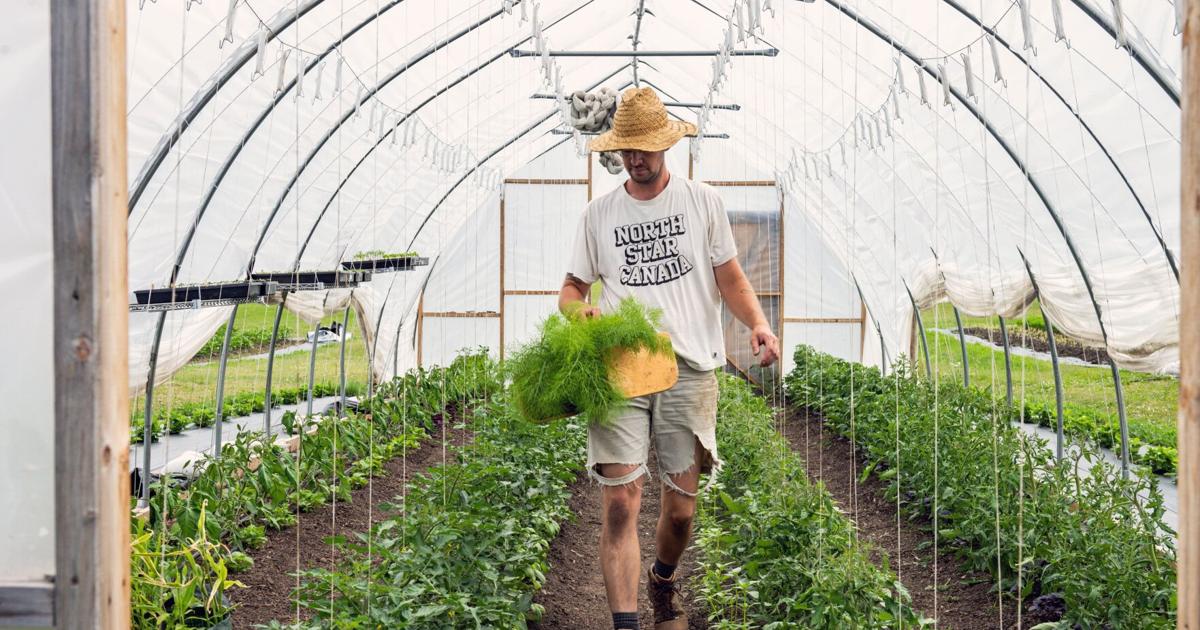
Chefs tend to have a long list of things to do: Prep, chop, sauté. Plan menus, cook for a crowd, clean up afterwards. But some of the city’s top chefs are adding even more to their workload: Planting, watering, pruning. Raising and picking the freshest produce, seeing it through from seed to plate.
When you dine on tender gai lan greens, Chinese chives and juicy Japanese melon at high-end dim sum restaurant Lai Wah Heen, it’s likely been grown on their own Norfolk County farm.
Prime Seafood Palace on Queen West receives a steady stream of pristine tomatoes, garlic scapes, purple broccoli, camomile and Chioggia beets from Blue Goose Farms, owner Matty Matheson’s small-scale farm in Fort Erie. Much of the bounty gets preserved to keep Ontario flavours flowing in the winter months.
Is getting into agriculture easy? Absolutely not. But for these passionate chefs, growing your own produce offers irreplaceable flavours, supply-chain solutions and an abundance of creative freedom.
Here, meet five Toronto chefs-turned-farmers giving farm-to-table dining new meaning.
Lai Wah Heen’s Dragon Farm, Norfolk County
Lai Wah Heen chef Gary Yue and his wife, Ming, picked up a popular hobby during the pandemic: gardening. First, they tried fig trees, then started growing food for their family.
As their skills grew, Yue realized this could also solve his restaurant’s sourcing problems. It was difficult to get fresh Chinese ingredients on Canadian soil. Why not grow them?
Now, their homegrown fig leaves are wrapped around baked chicken or made into teas — Ming grows almost 600 different fig varieties. The farm has rare breeds of chicken and a koi pond — the restaurant’s signature koi-shaped dumplings are served in their honour.
They grow choy sum, Chinese chives, Goji leaves and water spinach.
The team soon realized farm vegetables just taste better. “Ontario’s climate is actually well suited for a lot of Cantonese vegetables,” says Lai Wah Heen’s beverage director Peony Cen. Grocery store gai lan is thicker-stemmed and more bitter than theirs, which tastes like what Yue grew up eating in China. “And the garlic is amazing — it’s robust, and so aromatic you can smell it from three feet away.”
Not everything grows as planned: The Szechuan peppercorn ended up tasting like basil. “It didn’t work in entrees like we anticipated,” says Cen, laughing. “But it’s perfect for our cocktails.”
Fall feasting: Cen’s favourite fall dish is amaranth leaves. “They have a beautiful earthy flavour and natural sweetness. I like to cook them very simply with garlic. When the vegetables have just come from the farm, you really don’t need to do too much.”
Prime Seafood Palace’s Blue Goose Farms, Fort Erie
A technicolour rainbow of produce emerges from Matty Matheson-owned Blue Goose Farms, the site of Matheson’s soon-to-launch YouTube series, Matty’s Farm. Tomatoes the size of a grapefruit. Zucchinis with golden blossoms. Blushing pink beets.
Every week, chef-turned-farmer Keenan McVey and his wife, Ashley (a flower savant), pull up produce, then text Prime Seafood Palace chef Coulson Armstrong to let him know what’s coming so he can start conjuring up the week’s menu.
“We get everything in by Tuesday, test the dishes, photograph them, cost it, print recipes, and communicate allergens so we can swap the full menu by Friday,” says Armstrong.
This process has to be nimble and creative. The realities of farming mean the supply chain is dictated (and sometimes derailed) by rain storms, droughts, heat swings or other unpredictable spanners.
It’s worth it, for gems like ginormous, heart-shaped oxheart tomatoes. “They’ve never even seen a fridge,” says Armstrong. “We season them right before service and serve them like pan con tomate with B.C. Dungeness crab and confited garlic from the farm.”
The farm-restaurant relationship took a while to figure out, especially what gets eaten in-season, and what gets preserved, fermented or turned into condiments for colder months. “There was so much trial and error,” Coulson says, laughing. “We would ferment something and a few weeks later realize, oh that is not good. I guess it goes in staff meal.”
Fall feasting: When hosting big family dinners, “I like to add florals and greens to dishes to dress them up,” says Armstrong. “It automatically makes everything look more special and thoughtful.”
Bar Ape’s Berry Farm, Mount Forest
James Carnevale, owner of St. Clair West gelato hot spot Bar Ape, started farming out of necessity. The supply chain for two of his favourite berries — Tayberry and black raspberry — dried up.
“I was begging farmers for all they had,” he says. “I got to the point where I was cold-calling farms that may or may not sell them.”
These are special berries, with stories and flavours worth preserving. Black raspberries are indigenous to the North East. “Tay berries are the original blackberry, they have this unique watermelon Jolly Rancher meets raspberry flavour,” says Carnevale.
So he started planting his own, on his dedicated plot on Hawthorne Organic Seed Farm in Mount Forest.
He won’t see the first fruit till next year. Until then, he’s committed to sourcing other rare berries and deep-cut fruit varieties, driving around the province to pick up apricots, Ozark plums, gooseberry, haskap berry, cold-hardy kiwis and golden raspberries. Our gelato habit thanks him.
Fall feasting: White Niagara peaches are a Bar Ape gelato star. “It’s night and day difference between a farm-fresh peach and a grocery store one.”
Grant Van Gameren’s Home Farm, PEC
In the early days of Covid, chef Grant Van Gameren — owner of Bar Isabel, Bar Raval, Quetzal, and the soon-to-open Casa Rubia — did as many do and decamped to Prince Edward County.
For his family, it was a needed change of pace. “The county forces you to slow down and appreciate a different way of life,” he says.
For his career, country life offered a new challenge. “Being a chef, we love to explore new avenues that bring us closer to our trade,” he says. “Learning to grow vegetables was an obvious extension of that.”
He’s taken to it. Fresh cabbage is cooked into pork ragu at his Picton spot Rosetta, and the last of his summer tomatoes and peppers will end up preserved at Casa Rubia. Next up? Watermelon that’s just beginning to ripen.
It’s not always easy, especially when fall hits. “It’s all seeds and sunshine until August sets in, then you’re basically a full-time weeder ‘til October.”
Fall feasting: “Last year, we spatchcocked a very large turkey and roasted it in a wood burning oven,” says van Gameren. “It was absolutely amazing. If you have a wood oven, remember they aren’t just for pizza!”
White Lily Farms, Uxbridge
When White Lily Diner owners Ben Denham and Ashley Lloyd started their Uxbridge farm, they had a lot to learn. “We were just throwing things at a wall to see what sticks,” laughs Denham. “It’s dangerous for a chef to be looking through seed catalogues! There are so many heirloom vegetables and varieties that have fallen by the wayside over the years.”
Six years later, White Lily Farms supplies 20 restaurants with some 200 crops, including Habanadas (a heatless habanero), Jimmy Nardello (an Italian frying pepper), Barbie-pink Japanese okra, and celtuce (a crunchy, nutty, cucumber-ish lettuce).
Along the way, they realized they really, really like farming. So they sold White Lily Diner and opened Sundays, an itty-bitty, farm-to-table restaurant in Uxbridge. “We were doing 200 covers a day with a two-person kitchen,” says Denham. “It wasn’t sustainable. Now, our decisions revolve around produce.”
When deciding on fall dinner, Denham has a simple tip: “Ask the growers at the farmer’s market what they’re cooking! They’ll approach ingredients with so much care and intent.”
Fall feasting: Denham and Lloyd will be serving up roasts, braises and coq au vin blanc topped with farm-fresh arugula pesto, or duck liver with poached rhubarb.