

It is the first thing many patients do before seeking medical help: Consult Dr. AI.
But at a time when artificial intelligence (AI) is
revolutionizing health care
with tools to ease administrative burdens and create groundbreaking treatments and medications, there is growing worry about how it is increasingly being used by patients.
The Canadian Medical Association (CMA) says the AI revolution represents the future of medicine, but it comes with risks, particularly in the form of misinformation and potential harm to patients who use it for medical advice.
Even so, it is something 90 per cent of Canadians do, according to a recent CMA survey, although just 27 per cent said they trust it to provide accurate health information.
Over the past several years, the Canadian Medical Association has actively raised awareness about medical misinformation and warned of harms that can come to patients who frequently go online for health information.
A survey from the Canadian Medical Association (CMA) and Abacus Data included a worrisome look into the potential of information found online. The survey found that 97 per cent of doctors said they had to intervene to prevent harm or address consequences after a patient followed false or misleading health information found online, including advice from artificial intelligence.
Recent research has heightened those concerns about the spread of inaccurate information through
artificial intelligence
. The journal Nature recently reported on a scientist in Gothenburg, Sweden, who invented a skin condition caused by blue light that she called bixonimania, characterized by itchy eyes and pinkish eyelids. She uploaded two fake studies about it to see if large language models (a form of artificial intelligence) would repeat the fake research as reputable health advice. It did.
“Within weeks of her uploading information about the condition, attributed to a fictional author, major artificial-intelligence systems began repeating the invented condition as if it were real,” according to the Nature article. Some large language models later expressed some skepticism about the condition.
Amid concerns about the growing use of AI for medical advice, there is also some good news. Eighty-five per cent of Canadians say they trust doctors to help them navigate health information.
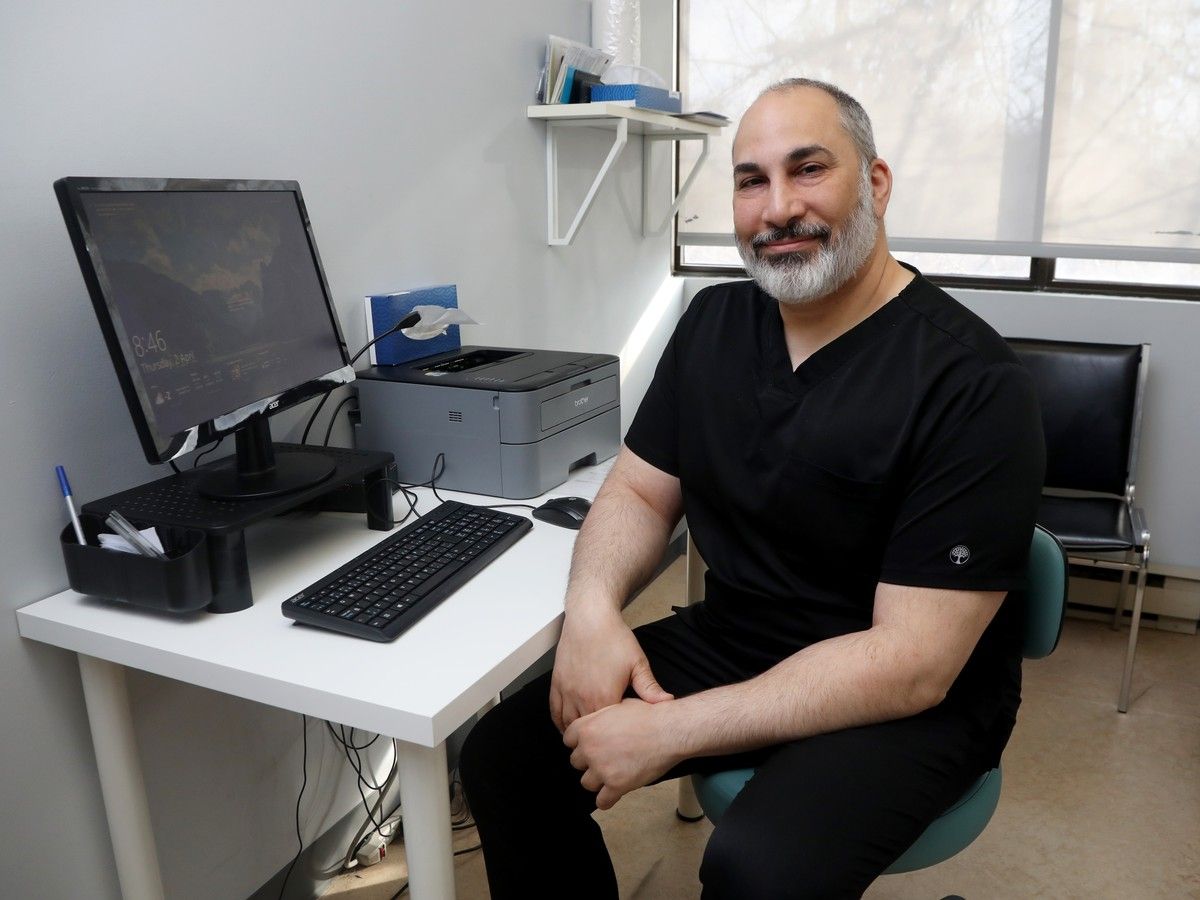
That is something Ottawa’s Dr. Mark Nassim is building on.
Nassim, who specializes in acute in-patient medicine, describes himself as “pro technology.” He accepts that many of his patients will go online to seek medical information before he sees them and they may arrive armed with that information. Information gained through artificial intelligence has the potential to do harm if used incorrectly, he acknowledges.
“Like any tool that you pick up to try and fix a problem, it can cause more problems,” Nassim said. But, if used properly, it can also “leverage and facilitate a person’s ability to get information and have informed discussions.”
That is how Nassim, who works at the Greenboro Family Medicine Centre and The Ottawa Hospital, tries to use it to open discussions with his patients.
Nassim says a lot of his patients go online and do some reading about their questions and concerns before coming to see him. Some don’t mention it, maybe fearing they will met with disapproval.
“Where people used to look things up on Google, now they are using AI tools,” he said. “It depends how comfortable they are with technology, but it is the next natural step to help them figure things out.”
Nassim says physicians should be open to people acquiring knowledge to gain a better understanding of their own health and should work with them to ensure they are getting accurate information and a full understanding.
“It is somewhat paternalistic to say, ‘Don’t do any research, don’t inform yourself, we will take care of this’,” he said.
“It is much better to be onside and say, ‘I think it’s great that you are looking at stuff. Let’s answer your questions together.’”
That, he said, is a more modern approach, especially since people are going to use the technology whether doctors want them to or not.
Dr. Margot Burnell, a medical oncologist who serves as president of the Canadian Medical Association, agrees that it is important for medical professionals to understand what patients are worried about, including what information and advice they are getting from online sources.
“I think it is much better knowing what they’ve accessed and giving them time to make sure the physician and the health-care team hear what their concerns are,” she said. If the patient and doctor have a trusting relationship, the doctor can verify the information or point the patient in another direction and explain why.
She encourages people to get or verify findings with information from reputable sites, run by governments, universities, medical organizations or non-profits with health expertise.
While the Canadian Medical Association pushes for regulations to help build AI systems “rooted in trust, safety, ethics and physician and patient involvement,” Ottawa’s Nassim accepts — even embraces — patients’ use of artificial intelligence as a way to open helpful conversations that can build trust.
He said that approach should also help patients learn to recognize good information from faulty information, “because AI still makes plenty of mistakes.
“But that’s the whole point. You use it as a tool as best as you can have an informed discussion with your doctor, and then joint medical decision making comes in.”
He offers this advice:
- Recognize the tool for what it is and what it isn’t. “It is a tool that can help you gain information more quickly. But, just like any tool, it doesn’t replace clinicians’ judgment or communications.”
- Keep the information you give to an artificial intelligence tool “high level” and avoid entering specific information about yourself to protect your privacy. Keeping questions about symptoms, for example, at a high level is also more likely to steer patients in the right direction, Nassim said.
- Make sure the question you are asking is the best one to steer you toward helpful information.
- Corroborate the information you get with more than one tool.
- Approach the information from a perspective of curiosity and take it to your physician. “This is a tool to help you better inform yourself so that you can have a great discussion with your doctor.”
Related
- Ottawa health board warned of ‘challenging summer’ ahead with downtown drug consumption sites set to close
- Her clinic fills urgent rural health needs; now this nurse practitioner fears she is being shut out
Our website is your destination for up-to-the-minute news, so make sure to bookmark our homepage and sign up for our newsletters so we can keep you informed.

