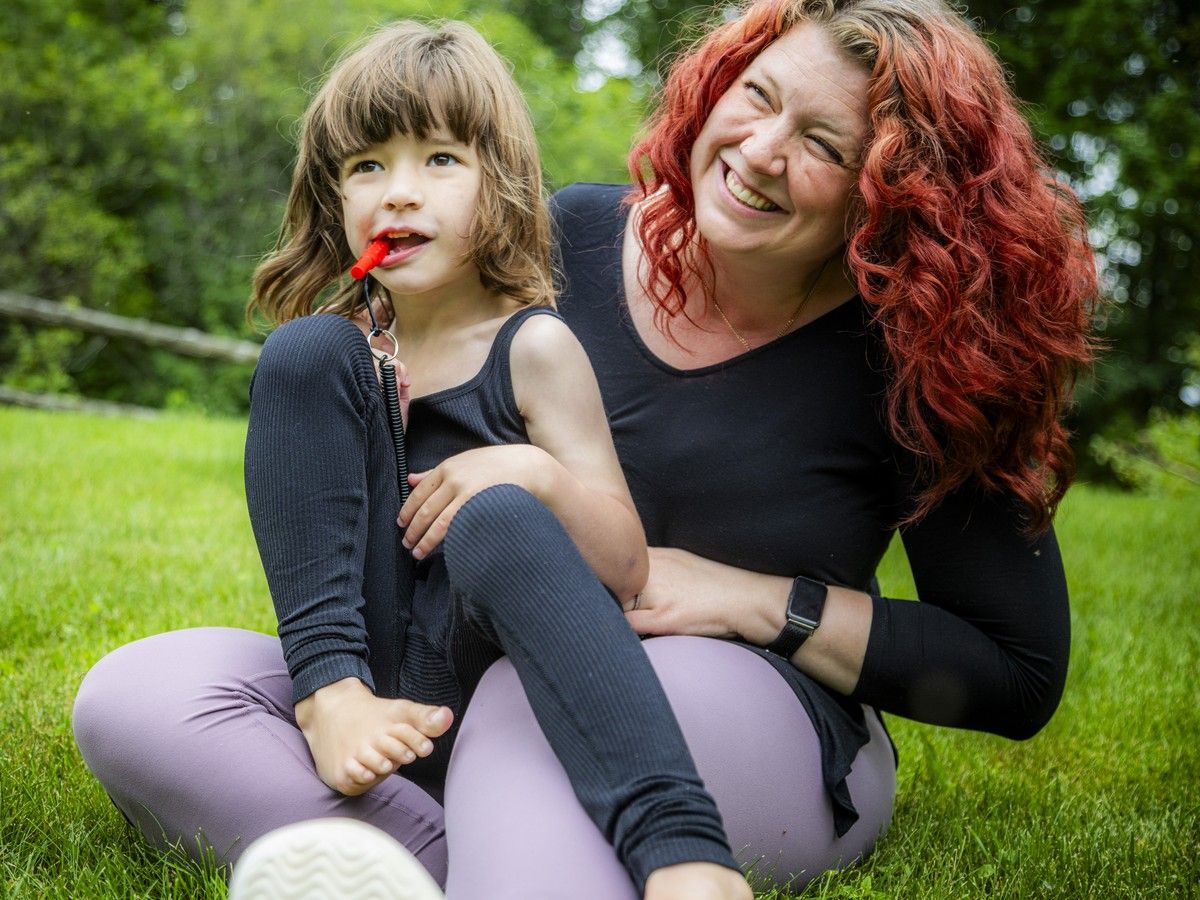
Celeste Constantineau knows the amount of time, planning and preparation that goes into attending a social event.
Showing up to her six-year-old daughter’s “seemingly benign” after-school events meant sitting down her youngest, Evelyn Zanivan, and communicating, ahead of time, the level of energy, the intensity of sound and the number of people present at the social gathering.
Evelyn was two years old when she was diagnosed with Autism Spectrum Disorder (ASD), and avoiding overstimulation meant Evelyn needed to be in the right frame of mind before heading out the door.
It was at the latest after-school event at the St. James Catholic School that Constantineau was struck by a realization that stirred up questions of exclusion, tolerance and social isolation, as she navigates life as a parent of a child on the spectrum.
While Constantineau said the school’s staff have long worked hard to be inclusive of Evelyn and her family, it was in tears that the Kanata mother said that some parents were not as understanding and inclusive.
“It struck me how different the school staff treats us, versus the parents,” Constantineau said, adding that she had this idea that her family had finally found an inclusive community at the school, but that this illusion was shattered when she witnessed the gaps of knowledge in autism awareness among some parents.

The experience was overwhelming for Constantineau, who said some other parents cast judgmental glances toward her daughter when she played with her peers.
“A lot of people push for inclusion until behaviours are overwhelming and inconvenient,” she said.
In the past, Constantineau said it was a sense of maternal instinct that pushed her to avoid social settings that risked psychological harm for herself and her daughter.
“I have a hard time going to those types of events with my little one,” she said.
But the safer alternative comes with its own set consequences. For Constantineau, who is also on the autism spectrum, this means a niche type of social isolation that most parents don’t understand.
Emily Jenkinson, an educational assistant at Phoenix Private Academic in Ottawa, said she works with more than 40 students who are on the spectrum .

She said parents of children with special needs can sometimes be afraid to put their children in social settings because they are “afraid that their kid would get picked on,” adding that those fears are a valid concern.
But Jenkinson said growing up with two cousins who are both on the spectrum made her realize the importance of socialization.
“When (neurotypical) kids are exposed to kids with special needs, then they learn how to interact with them,” she said. “It’s not a big thing, it’s not a big deal. And it’s fine.”
Jenkinson said the same thing applies to parents.
“Every parent wants to see their kid succeed and thrive, and parents being able to see their child interact with other kids on the spectrum would definitely help expose them.”
Jenkinson said she often comes across some people who don’t have the social awareness needed to be respectful.
“A lot of the times, I’ve had to have a conversation with some people who stare and look, and had to say, ‘Hey, our kids have some special needs, you can mind your own business, there’s no need to talk about them while they’re right here. They can hear you and they can understand you.’”
She said it is unfortunate that those conversations are needed, but that in the long run they are important because “exposing the world to different types of needs and different types of people makes a change.
“And that also shows the kids that, ‘There’s nothing for me to be embarrassed about.’ ”
For Constantineau, the journey of raising her child has helped her grow.
“I might not be as profoundly autistic as my youngest child, but it’s interesting to see the dynamic, and I never realized that people were as impatient or as standoffish as I see when I have my child.”
Looking back, she says she suppressed a lot of behaviours that she now realized she was trying to hide because they got her in trouble.
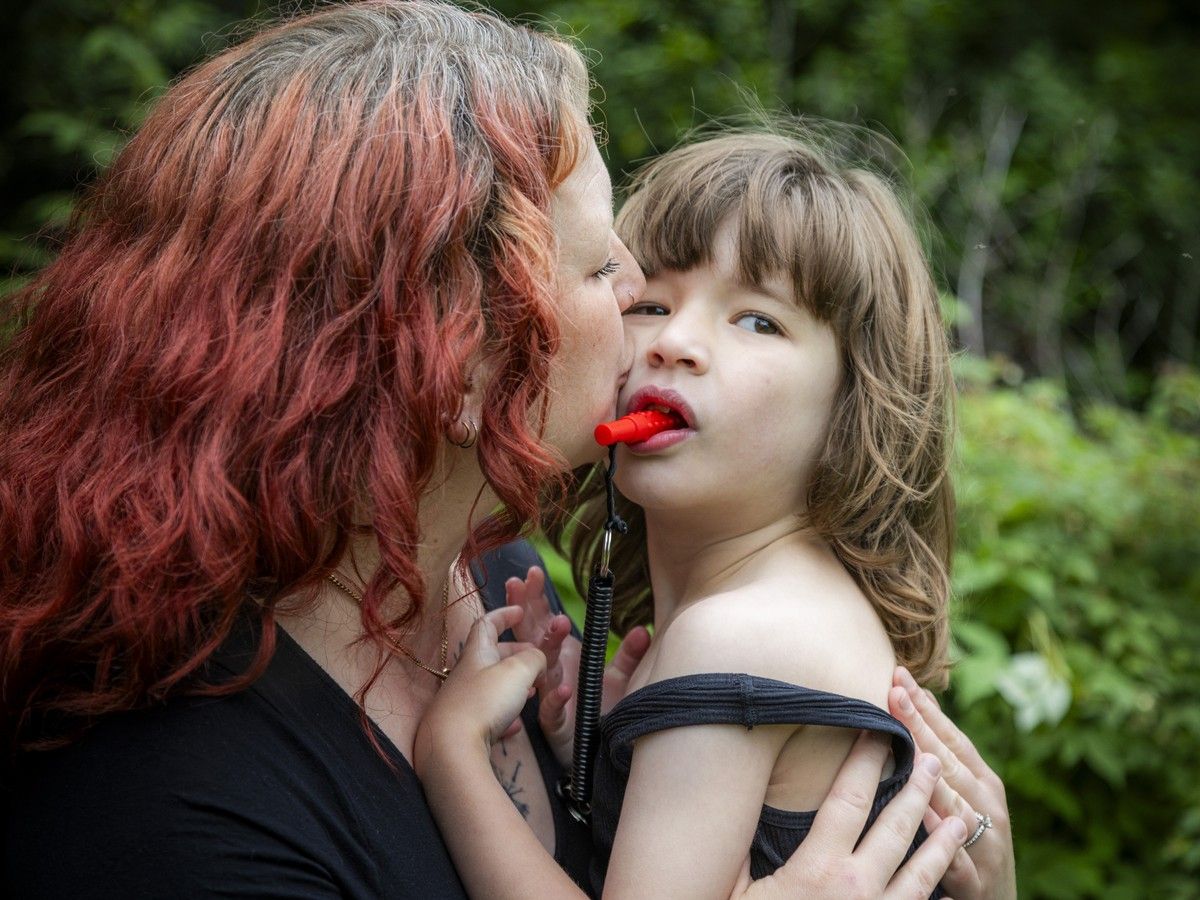
“It’s been a lovely healing source being able to provide my daughter with things that I necessarily didn’t have growing up,” Constantineau said, adding that though her daughter may likely not notice other parents’ perception of her, the experience has brought up childhood wounds of her own.
Constantineau said her daughter is energetic, enthusiastic, athletic and has got a sense of humour.
“She has this huge personality and she’s got attitude,” her mom said affectionately of her youngest. “There’s a lot of nuances to being a parent with a child with disabilities.”
But the hardship is not limited to a social one. Getting funding has not been an easy journey for Constantineau and her family, who said her daughter has been inching towards the top of the list for Ontario Autism Program’s Core funding for years now.
The funding is meant to cover equipment, therapy and care, according to Constantineau.
“I’ve had her on the list since she was just under three,” Constantineau said. It’s going to be another year-and-a-half to two years before the funding is released.
According to a March 2026 analysis published by End The Wait Ontario, an advocacy organization that tracks funding and waitlist results of Ontario’s autism programs , there were 89,799 children registered in various funding programs that year.
This number is up by 121 per cent from 2020 when there were 40,700 registrations.
Meanwhile, the report says the funding for the autism program has only increased by 61 per cent since 2020 (going from $600 million in 2020 to $965 million in 2026).
As a result, the report says 69,166 children with autism are without funding despite the $965 million allocated for the Ontario Autism Program in the 2026-2027 budget.
Despite the “largest single-year increase in program history,” per-child funding is 27 per cent lower than 2020 because registration growth outpaced funding growth, according to the report.
This data was last verified by the organization on March 4, 2026.
“It would be nice to share with the public that we are working so hard to make sure that our child has all the resources that they need,” Constantineau said. “It’s like a full-time job to manage the schedules and appointments of someone with special needs.”
Our website is your destination for up-to-the-minute news, so make sure to bookmark our homepage and sign up for our newsletters so we can keep you informed.