

Donald Trump knows well enough that the art of a good deal is making the best of a bad lot.
The U.S. president made the best possible deal this week, given that he’d started the worst possible war last February — a war of choice that left him no choice but to sue for peace. Despite winning the battle over Iranian airspace, he lost the war over the Strait of Hormuz — and ultimately had to cut his losses.
Iran was outgunned, to be sure, but the U.S. was outmanoeuvred. The more the Americans and their Israeli allies pummelled Iran, the more the Iranians squeezed shipping lanes and picked off neighbouring Gulf states that couldn’t be defended, further driving up gas prices in the U.S. heartland.
In this zero-sum war game, the losses kept piling up. Which is why the memorandum of understanding signed this week comes as a relief to so many — for a flawed peace is better than the alternative of winning a war without end.
The critics are correct that it is a threadbare document, for it started to unravel the morning after the signing. The biggest gap — and greatest opportunity — is in the opening paragraph, which purports to bind both Israel and Hezbollah on the Lebanese battlefield even though neither party is tethered to the deal.
Iran keeps insisting, as it did when the fighting first wound down in April, that it can dictate events in Lebanon at will, in ways that suit Iran’s national interests if not quite Lebanon’s sovereign will. It can continue acting as colonizer and instigator, provocateur and purported peacemaker, as it has for decades in Lebanon.
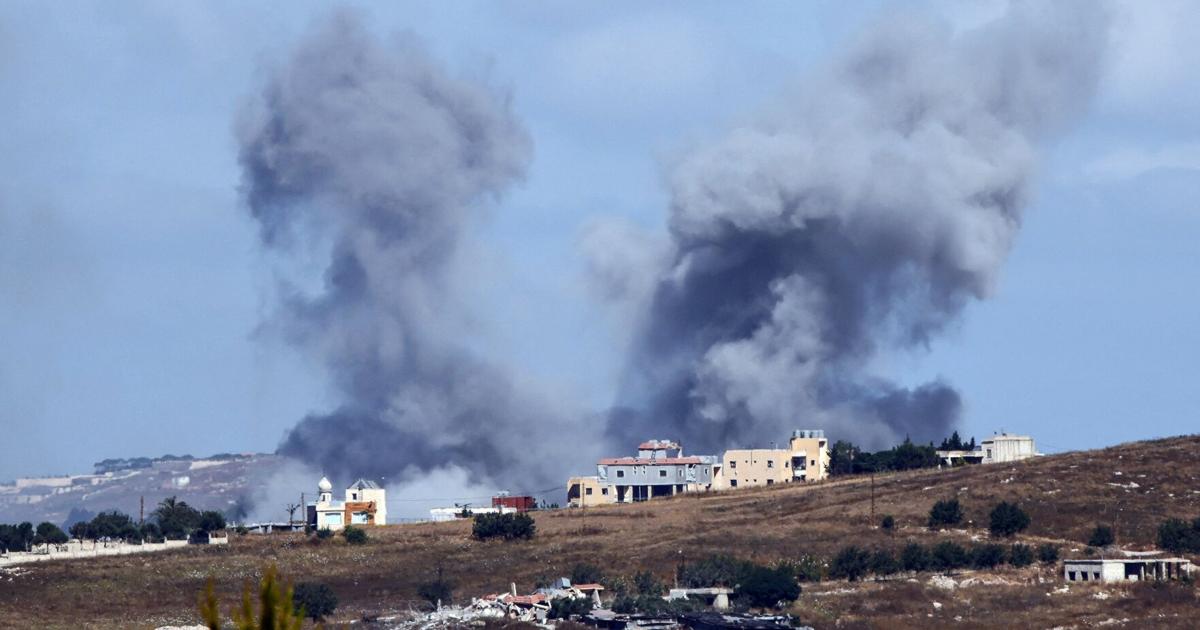
And so when Hezbollah fighters — funded, fomented, armed and supplied by Iran — mounted a deadly attack on Israeli troops occupying southern Lebanon, it triggered a counterattack that characteristically lapsed into Israeli overkill. On cue, Iran cried foul, claiming a violation of the MOU that demands a ceasefire by all sides — and promptly delayed the start of follow-up negotiations with the U.S. in Switzerland.
Iran seems to believe that the MOU’s wording provides for a one-sided trigger mechanism that gives Hezbollah a free hand to wreak havoc in both southern Lebanon and northern Israel while leaving Israeli forces no right of response. That is obviously unsustainable, and it is noteworthy that by Friday both sides, Hezbollah and Israel, quickly agreed to a fresh ceasefire on the ground in Lebanon, linked to the truce between Iran and the U.S.
What does this mean? So far, each side wants this ambiguously worded MOU to mean whatever they want it to mean — especially the players who are not signatories to the deal.
At first, Hezbollah and Israel insisted they were not bound by the MOU. Now, in the wake of Friday’s deadly round of fighting, they seem beholden, belatedly, to a ceasefire of sorts.
However fragile, this development is cause for cautious optimism. Hezbollah is taking account of the new dynamic after trying to follow its own path.
Until now, Hezbollah remained an outlier, the odd one out in the peace process. By contrast, the governments of Israel and Lebanon worked together to reach an entente last month calling for peace on both sides of their shared border predicated on the disarmament of Hezbollah.
Unsurprisingly, Hezbollah bitterly denounced that Israel-Lebanon entente, defying the demand to disarm.
All that said, Israel can also be its own worst enemy in Lebanon. For decades, it has tried to subdue non-government fighters in Lebanon, hubristically and brutally invading and occupying the country in fits and starts.
The so-called border security zone that Israel occupied in the 1990s became a quagmire, turning Israeli soldiers into sitting ducks for Hezbollah’s roadside bombs and guerrilla ambushes. Little wonder it withdrew unilaterally in 2000 on the orders of then-prime minister Ehud Barak, a former armed forces chief of staff.
This month, a quarter-century after that withdrawal, Barak warned his fellow Israelis that “There is no way to completely (defeat Hezbollah) without conquering the whole of Lebanon, which is totally impractical.”
Israel is now doing the dirty work of disarming Hezbollah forces close to its northern border, but at a certain point it is a fool’s errand, for the solution must ultimately be political, not military. Pressure must be brought to bear on Hezbollah, by Canada and the international community, to demilitarize the border regions so that the legitimate Lebanese military forces can remilitarize the area with troops authorized by the duly elected government.
The Lebanese people and their politicians must come to terms with this reality, or they will forever remain a failed state colonized and weaponized by Iran and occupied by Israel. A new government in Lebanon has shown remarkable pragmatism in recent months, despite the bloodshed within their borders.
So too the Israeli government and its military must come to realize that they cannot remain an occupying power in the sovereign territory of Lebanon. Ongoing negotiations between Israel and Lebanon, set to continue in the coming days, represent a historic and unprecedented opportunity to cement peace along their shared border.
Israelis often talk about how their adversaries never fail to miss an opportunity to miss an opportunity. They should know better than to miss this one in Lebanon.
Error! Sorry, there was an error processing your request.
There was a problem with the recaptcha. Please try again.
You may unsubscribe at any time. By signing up, you agree to our terms of use and privacy policy. This site is protected by reCAPTCHA and the Google privacy policy and terms of service apply.
Want more of the latest from us? Sign up for more at our newsletter page.

