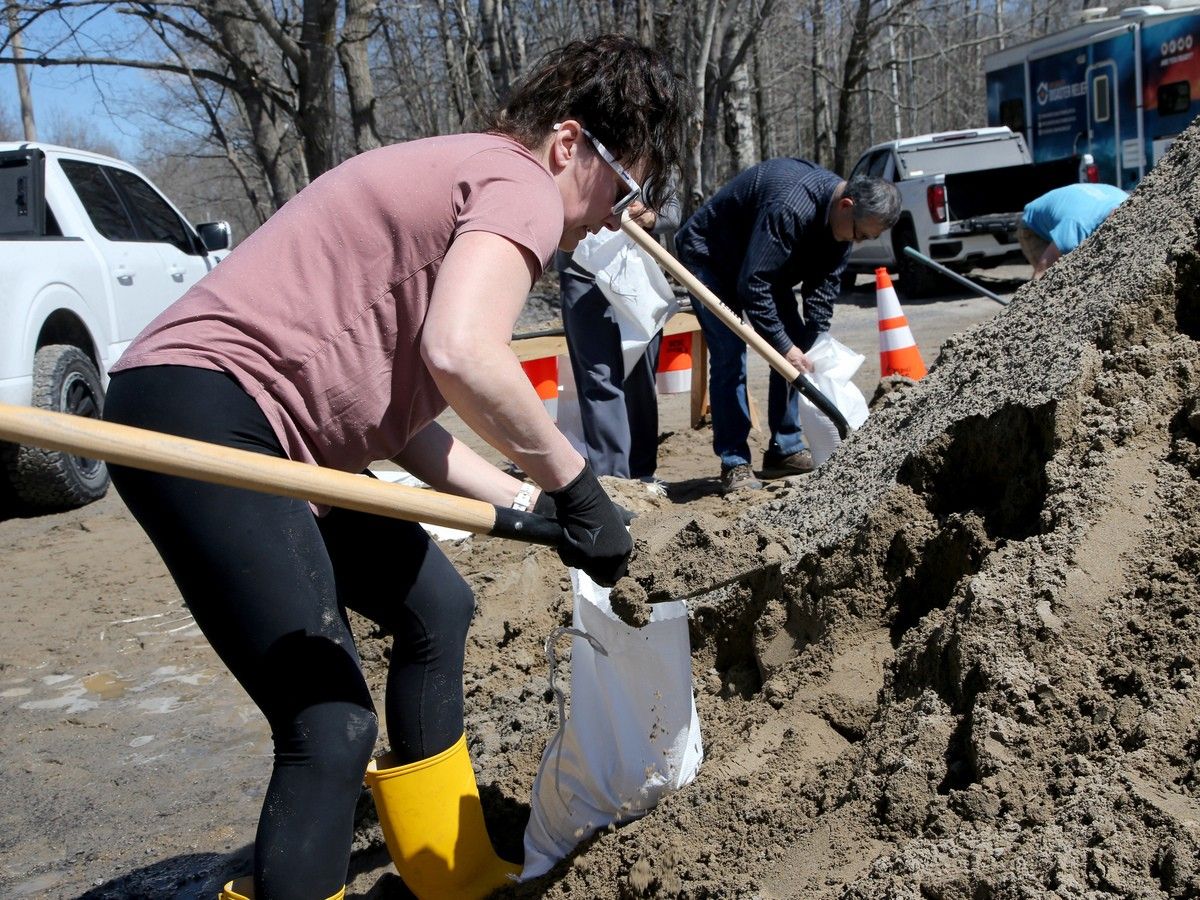
City councillors gave the green light to a $1-million grant program for community groups to prepare for extreme weather events and to respond to localized emergencies.
Ottawa has experienced an increasing frequency and intensity of severe weather in recent years, with councillors recounting the impact of the tornadoes that cut a swath across the capital region in September 2018, the derecho that flattened trees and damaged homes in May 2022, two more tornadoes that touched down in July 2023 along with recurring winter ice storms, spring flooding and summer heatwaves, dry wells and wildfire smoke.
“An ongoing joke in my ward is that we’re just waiting for the locusts to come because we seem to have experienced pretty well everything else,” said West Carleton-March Coun. Clarke Kelly, whose ward took a direct hit from the 2018 tornado and has seen some of the region’s most severe seasonal flooding.
“Unfortunately, we’ve had plenty of opportunities to learn what disaster relief really means,” Kelly said. “But one of the most important lessons we’ve learned is that community resilience makes all the difference. Local volunteers, community organizations and neighbours are often the first source of support for residents — long before any official recovery efforts are initiated by the province or the city.”
Under the three-year pilot program, funding would be available to eligible non-profit community groups that demonstrated governance and accountability practices and delivered projects and services to Ottawa residents, staff told the joint committee of emergency preparedness and climate change on June 16.
Eligible groups would include community associations, faith-based entities, small social-service providers and small registered charities, with funding up to $50,000 per group available each year for planning, training, co-ordination and acquiring equipment and supplies.
City staff conducted an online survey and received 72 responses from community groups in March and April that reported a range of climate-related risks , but fewer than one-third had community emergency plans, highlighting “a significant preparedness gap,” staff told committee members.
The city’s office of emergency management would administer the program and grant recipients would be required to report on outcomes. Staff will report back to councillors after one year of the program and again after the three-year pilot with findings and recommendations.
Projects that would be eligible for funding include services that would develop community emergency plans, outreach and education, training on safe equipment operation or maintenance and planning, training or exercises for specific climate-related risks.
The purchase of equipment like mobile generators or power stations for extended power outages would be eligible for funding, along with the purchase of tents and temporary shelters, wheelbarrows, shovels, temporary flood barriers and sump pumps.
Recipients would be required to demonstrate a need for the equipment and the expected beneficiaries, the capacity to maintain and operate the equipment and would require an established community emergency plan.
Personal safety and protective equipment like safety vests, work gloves and flashlights would be eligible for funding, along with power banks, crank radios, short-range radios, base stations and satellite links.
The program comes with a list of requirements for groups to receive funding and an assessment criteria and selection process.

“ Extreme weather events are becoming and are certainly also predicted to be more frequent and severe, making community resilience and building that capacity within the community more important than ever,” said Nichole Hoover-Bienasz, the city’s director of climate change and resiliency services.
“So this grant program is intended to help communities better prepare for emergencies when they happen and position them to better support neighbors throughout extended emergencies. Empowering residents, our neighborhoods and community organizations before emergencies helps protect health and safety, strengthens that local response capacity, and supports faster recovery during extreme weather events.”
The program will head to council on June 22 for final approval and would be implemented later this year.
Our website is your destination for up-to-the-minute news, so make sure to bookmark our homepage and sign up for our newsletters so we can keep you informed.